

jackhuang5919@gmail.com
Inspection & Testing Protocols for New Excavator Hydraulic Pumps
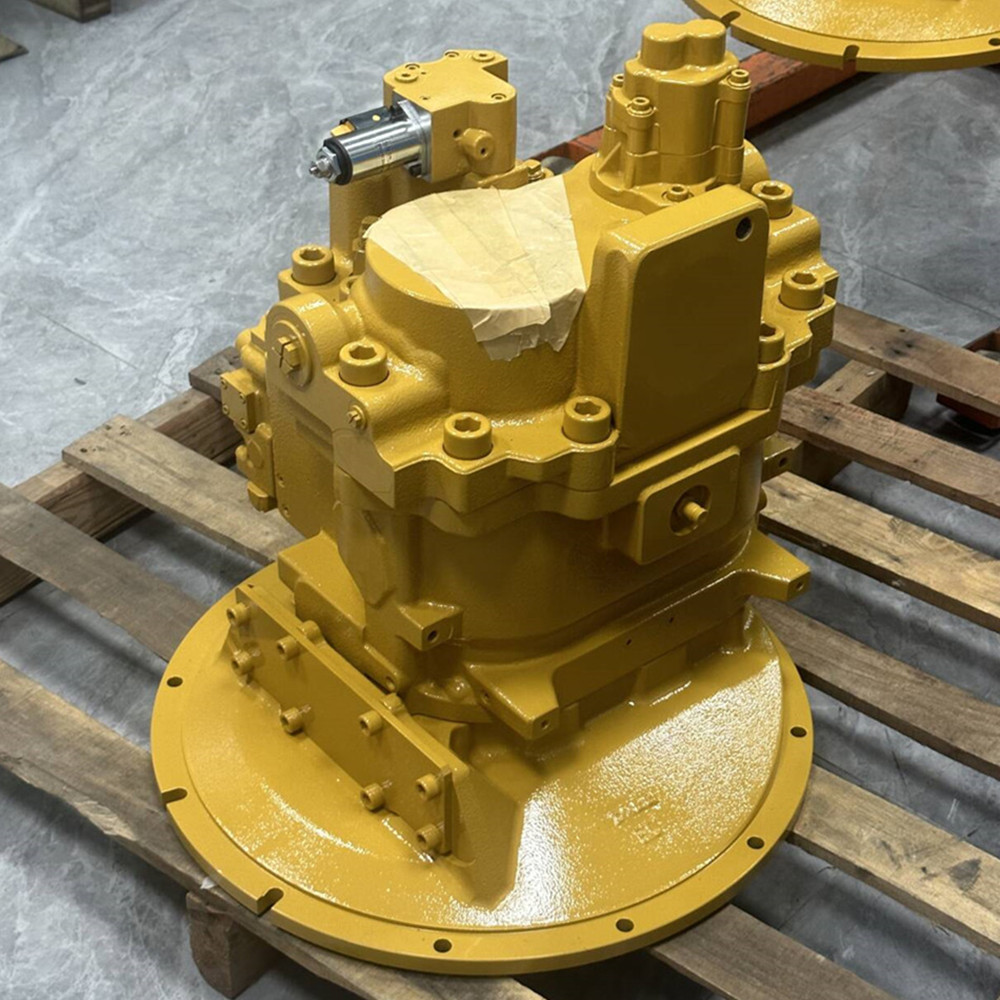
Comprehensive, step-by-step inspection and testing protocols for new excavator hydraulic pumps — including pre-installation checks, bench testing, contamination control, acceptance criteria and troubleshooting — tailored for the 336D Excavator Hydraulic Pump | Heavy Duty CAT Replacement.
- Inspection & Testing Protocols for New Excavator Hydraulic Pumps
- Why rigorous inspection and testing of a hydraulic hydraulic pump matters
- Scope: what this protocol covers (applies to CAT 336D pumps and equivalents)
- Pre-delivery visual inspection — first-line quality check
- Controlled unpacking and contamination control
- Static mechanical inspection checklist
- Required test equipment
- Bench testing protocol — step-by-step
- Acceptance criteria and recommended targets
- Comparing OEM vs High Quality aftermarket testing expectations
- Troubleshooting common bench-test failures
- Documentation, traceability and test reports
- Installation best practices after acceptance
- Performance monitoring after commissioning
- Brand alignment: how the 336D Excavator Hydraulic Pump supports inspection protocols
- FAQ — Common questions about inspection & testing for excavator hydraulic pumps
- Contact & product information
- References & authoritative sources
Inspection & Testing Protocols for New Excavator Hydraulic Pumps
Why rigorous inspection and testing of a hydraulic hydraulic pump matters
New hydraulic pumps for excavators are mission-critical components: they convert engine power into the hydraulic energy that operates booms, buckets, and tracks. A defective or contaminated pump installed without proper verification can cause premature system failures, downtime, costly repairs, and safety risks. For high-value parts such as the 336D Excavator Hydraulic Pump | Heavy Duty CAT Replacement, following standardized inspection and testing protocols preserves warranty coverage, ensures expected performance, and reduces lifecycle cost. Inspection alone cannot eliminate all risks. Managing supply chain risks and lead time strategies for pump procurement ensures stable availability for maintenance and overhaul schedules.
Scope: what this protocol covers (applies to CAT 336D pumps and equivalents)
This guide outlines practical, field- and bench-level inspection and testing steps for new excavator hydraulic pumps (OEM or high-quality aftermarket), focusing on visual inspection, mechanical checks, bench flow/pressure testing, contamination control, functional acceptance criteria, and documentation best practices specifically relevant to heavy-duty pumps used in Caterpillar 336D excavators.
Pre-delivery visual inspection — first-line quality check
Before unpacking or moving the pump into a clean area, perform a visual inspection to detect shipping damage and compliance with order specifications. Key checkpoints:
- Verify model and part number match: confirm the pump is the 336D Excavator Hydraulic Pump | Heavy Duty CAT Replacement (or specified OEM/aftermarket code).
- Inspect external surfaces and mounting flange for dents, cracks, or obvious misalignment.
- Check shaft: ensure protective caps are intact and shaft rotates smoothly (if accessible) without binding.
- Confirm accessory hardware: fasteners, O-rings, relief valves, and plugs shipped with the pump are present and undamaged.
- Verify documentation: packing list, test certificates (if provided), warranty papers, and contamination-control tags.
Controlled unpacking and contamination control
Hydraulic components are highly sensitive to particulate contamination. Unpack in a clean, indoor area with filtered air if possible. Follow these steps:
- Wear lint-free gloves and clean clothing. Avoid touching sealing surfaces and ports.
- Inspect shipping seals and preservation oil; remove protective plugs only immediately prior to test connections.
- Aim for hydraulic fluid cleanliness in line with manufacturer recommendations (consult CAT or pump OEM). Many mobile hydraulic systems target ISO 4406 cleanliness levels; check the specific target in the pump documentation.
Static mechanical inspection checklist
With the unit unpacked, perform detailed mechanical checks before bench-testing.
- Mounting face: verify flatness and absence of burrs or residue.
- Input shaft & coupling: confirm alignment dimensions and spline condition.
- Rotation verification: manually rotate shaft (when safe) to check for smooth operation and absence of abnormal friction or noise.
- Seals and O-rings: verify correct material and undamaged condition.
- Nameplate/spec verification: rated flow and pressure should match the application needs for the CAT 336D.
Required test equipment
Set up a bench or mobile test rig with the following minimum equipment for meaningful results:
- Variable-speed electric motor with torque/load control and appropriate coupling
- Pressure-limited hydraulic reservoir with filtration (micron-rated filters)
- Flow meter (±2–3% accuracy) and calibrated pressure gauges
- Temperature sensors, tachometer, and torque sensor (optional but recommended)
- Data-logging system to record pressure, flow, temperature, and RPM
- Leak-detection materials and clean drip trays
Bench testing protocol — step-by-step
Perform bench testing in the following order, recording all data.
- System setup: mount pump securely, connect suction and pressure lines with clean hoses, prime the pump with recommended hydraulic fluid to avoid dry run.
- Low-speed rotation: run pump at low RPM to verify fluid movement and absence of cavitation noise. Check for air bubbles in suction line.
- No-load flow check: measure free flow at nominal RPM and compare against rated flow. Typical acceptance: flow within ±5% of nameplate rating (verify OEM).
- Pressure build/relief verification: gradually apply load to reach rated pressure. Verify relief valve operation if integrated and ensure pressure holds without rapid decay when load is removed.
- Leakage test: inspect all seals and joints for external leaks over an extended run (30–60 minutes under nominal load).
- Thermal/stability run: run pump at nominal load for a sustained period (e.g., 60 minutes) to check temperature rise and stable operation; monitor for smoke, abnormal vibration, or thermal runaway.
- Noise & vibration assessment: listen and measure vibration levels. Excessive noise or abnormal frequency components indicate internal damage or misassembly.
Acceptance criteria and recommended targets
Acceptance must be tied to manufacturer or application requirements. Use the table below for typical acceptance criteria applied to heavy-duty excavator hydraulic pumps (representative values — verify against OEM specs for the 336D pump):
| Test | Typical Target / Acceptance | Action if failed |
|---|---|---|
| Visual (no external damage) | No dents/cracks; nameplate matches | Reject/return to supplier |
| Flow at rated RPM | Within ±5% of rated flow | Investigate internal wear or incorrect displacement |
| Pressure hold | Maintains rated pressure with <5% decay over 10 minutes | Check relief valve, internal leakage |
| External leakage | Zero visible leakage under nominal pressure | Replace seals/return pump |
| Noise / Vibration | Within manufacturer vibration thresholds; no abnormal noise | Balance, alignment, or internal defect inspection |
| Fluid cleanliness | ISO 4406 level per OEM (commonly 18/16/13 or cleaner) | Flush system; replace fluid; retest |
Comparing OEM vs High Quality aftermarket testing expectations
When selecting between OEM and high-quality aftermarket 336D pumps, testing expectations may differ. The table below summarizes common differences:
| Aspect | OEM | High Quality Aftermarket |
|---|---|---|
| Factory test certificates | Often included, traceable to production batch | May include third-party or in-house testing reports |
| Parts traceability | High (serial numbers, OEM supply chain) | Varies; high-tier aftermarket provides good traceability |
| Acceptance testing before shipping | Standardized per OEM quality systems | Comparable if vendor is reputable; verify test data |
| Availability & cost | Higher cost, guaranteed fit | Lower cost, may be faster to source |
Troubleshooting common bench-test failures
Common issues and recommended first actions:
- Low flow: check for incorrect displacement pump supplied, internal wear, or partial blockage in suction lines.
- Pressure instability: inspect relief valve, check for internal leakage between pressure and suction chambers.
- Cavitation noise: verify reservoir level, suction line restrictions, and air ingress; ensure fluid viscosity and temperature are correct.
- Excessive heat: confirm fluid viscosity, excessive internal leakage, or pump over-speeding.
Documentation, traceability and test reports
Maintain a test report for every pump that includes: serial/part number, supplier, date, bench test data (flow, pressure, RPM, temperature), fluid cleanliness readings, calibration certificates for test instruments, photographs of the unit, and inspector signature. This supports warranty claims and future troubleshooting.
Installation best practices after acceptance
After accepting the pump, follow these installation best practices to protect its tested condition:
- Replace or clean reservoir filtration to the recommended micron rating before commissioning.
- Use fresh, manufacturer-recommended hydraulic fluid and pre-fill/prime suction to avoid dry starts.
- Ensure correct shaft coupling alignment and torque fasteners to recommended values.
- Perform a staged commissioning: low-speed run, progressive load increase, and short inspection intervals for the first 8–16 hours of operation.
Performance monitoring after commissioning
Early-life monitoring identifies failures before they escalate. Recommended monitoring points for the 336D Excavator Hydraulic Pump:
- Hourly checks during initial shift cycles: temperature, leakage, abnormal sound.
- Weekly checks for flow/pressure consistency and fluid cleanliness sampling.
- Scheduled vibration analysis and endoscopic inspection during planned maintenance intervals.
Brand alignment: how the 336D Excavator Hydraulic Pump supports inspection protocols
The 336D Excavator Hydraulic Pump | Heavy Duty CAT Replacement is built for power, durability, and predictable performance in demanding construction environments. Because it’s designed for direct fit on CAT 336D excavators and is available as OEM or High Quality aftermarket, it pairs well with rigorous inspection and testing protocols. Its documented performance ranges and availability of test documentation simplify acceptance testing and reduce uncertainty when commissioning equipment.
FAQ — Common questions about inspection & testing for excavator hydraulic pumps
Q: How long should a bench test run before accepting a new pump?
A: Perform an initial 30–60 minute functional run at nominal load to check for leaks and stability, plus a longer 60-minute thermal/stability run if feasible. Document results and compare against acceptance criteria.
Q: What cleanliness level should I expect for a new pump?
A: Follow the pump or excavator OEM recommendation. Many heavy-duty hydraulic systems aim for ISO 4406 cleanliness levels (e.g., 18/16/13 or cleaner); always confirm the target with the equipment manual or supplier.
Q: Can I install a pump that failed minor bench tests after minor repairs?
A: Repairs may be acceptable if performed by qualified technicians and re-tested to meet acceptance criteria. For warranty issues, consult the supplier first — unauthorized repairs can void coverage.
Q: How often should vibration or endoscopic inspections be performed after installation?
A: Include vibration analysis and visual endoscopic inspections in scheduled maintenance — typically every 250–500 machine hours for heavy use, or as recommended by the machine OEM.
Contact & product information
For authenticated replacement parts and support for the 336D Excavator Hydraulic Pump | Heavy Duty CAT Replacement, contact our sales and technical team. View the product spec sheet and request test reports or purchase information at: /products/336d-excavator-hydraulic-pump or email: sales@yourcompany.com. Our technicians can provide pre-shipment test certificates and walk you through an on-site acceptance checklist.
References & authoritative sources
For further reading and standards referenced in inspection and testing best practices, consult the following authoritative sources:
- Hydraulic pump overview — Wikipedia: https://en.wikipedia.org/wiki/Hydraulic_pump
- Caterpillar official site and support resources: https://www.cat.com
- Bosch Rexroth — Hydraulics product information and application guides: https://www.boschrexroth.com
- ISO 4406 — Hydraulic fluid contamination code: https://www.iso.org/standard/36245.
- ISO 4413 — Hydraulic fluid power — General rules and safety requirements: https://www.iso.org/standard/67083.
- The Hydraulic Institute / Pumps & systems resources: https://www.pumps.org
Document prepared to support evidence-based acceptance testing and long-term reliability for new excavator hydraulic pumps, with emphasis on CAT 336D class installations.
Tags
CAT 312C hydraulic pump
CAT 312C hydraulic pump
SBS120 excavator hydraulic pump
SBS120 excavator hydraulic pump
Buy C4.2 Excavator Engine
Buy C4.2 Excavator Engine
caterpillar c9 engine for sale
caterpillar c9 engine for sale
Isuzu 4JG1 engine replacement
Isuzu 4JG1 engine replacement
CAT C9 turbo diesel engine
CAT C9 turbo diesel engine
Recommended for you
Engineered Diesel Advantages: Why Isuzu D1703 Fits Heavy Fleets
Hydraulic Pump Noise: Causes and How to Fix It
How to Troubleshoot Common Issues in Excavator Parts: Practical Guide
Procurement Guide: Specifying Isuzu D1703 Engine Assemblies
Prdoucts Categories
Question you may concern
FAQ
How can I place an order?
You can place an order through our user-friendly online platform or by contacting our sales team directly. Simply browse our catalog, select the parts you need, and follow the checkout process to complete your order.
How do I know which parts I need for my excavator?
If you are unsure which parts are needed, our knowledgeable customer support team can assist you. You can provide us with your excavator model and any relevant details, and we will help you identify the correct parts.
Are your parts compatible with all excavator brands?
Weihuparts strives to offer parts compatible with a wide range of excavator brands and models. However, we recommend checking the product specifications or consulting with our team to ensure compatibility with your specific excavator.
What is your shipping policy?
We offer a variety of shipping options to meet your needs. Orders are typically processed within [insert processing time] days, and delivery times may vary based on your location. We will provide you with tracking information once your order has shipped.
Do you provide warranties on your products?
Yes, we stand by the quality of our products. Most parts come with a warranty that covers manufacturing defects. Please refer to the specific warranty information provided with your purchase or contact our customer service team for details.
You may also like
CAT 980H Hydraulic Pump | Heavy-Duty Loader Replacement Part
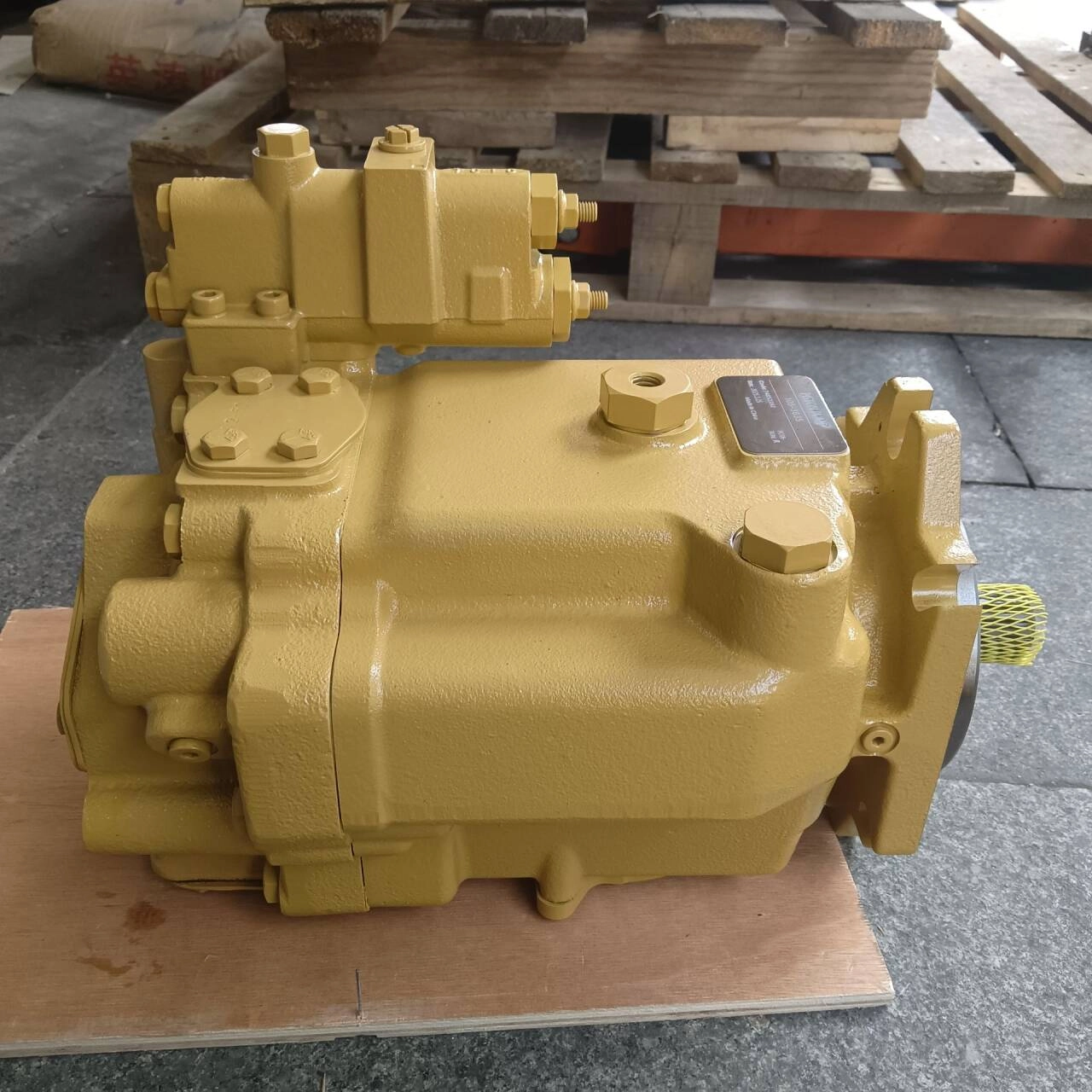
The CAT 980H and 980G hydraulic pumps are engineered to provide optimal hydraulic power and durability for Caterpillar loaders. Built with premium materials and precision manufacturing, these pumps are ideal for OEM replacements and high-quality aftermarket upgrades. They ensure smooth hydraulic operation and reliable performance in demanding construction environments.
-
✔️ Direct fit for CAT 980H and 980G loaders
-
✔️ Available in OEM and aftermarket versions
-
✔️ High-pressure, heavy-duty hydraulic performance
-
✔️ Manufactured with high-strength alloys and quality seals
-
✔️ Tested for durability and efficiency
-
✔️ Fast global shipping and excellent customer support
- 🛒 Order your CAT 980H & 980G Hydraulic Pump now!
📞 Contact us for bulk orders, technical support, or custom requests.
📦 Fast worldwide shipping | OEM & aftermarket options available -
Doosan DX65 Excavator Hydraulic Pump | High-Performance Main Pump
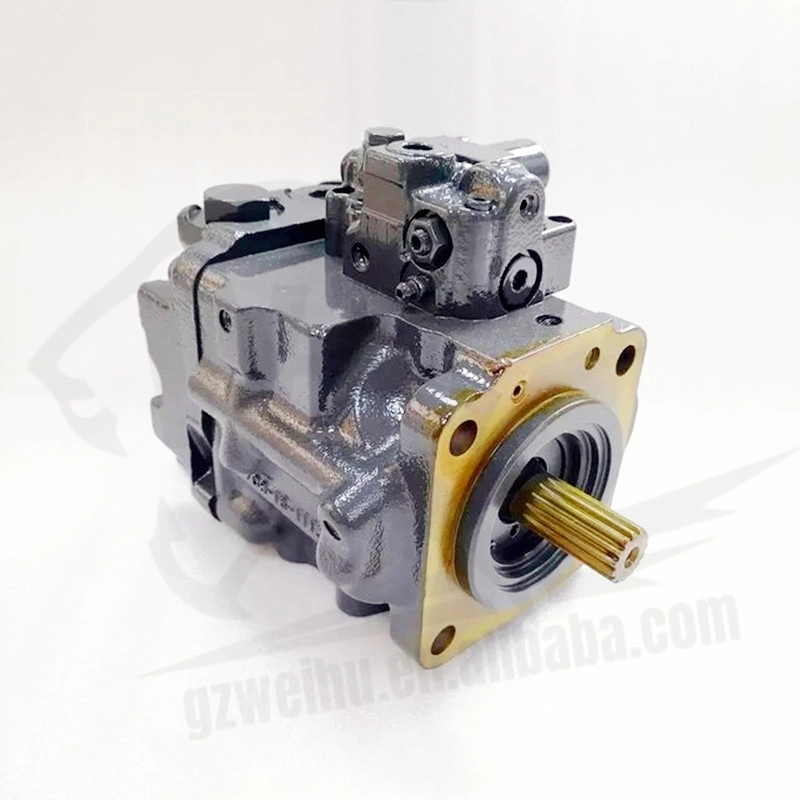
The DX65 hydraulic pump is designed for Doosan DX65 mini excavators, delivering reliable and consistent hydraulic power for smooth machine operation. Whether you're replacing a worn pump or upgrading for enhanced performance, our OEM and aftermarket DX65 pumps offer durability, compatibility, and affordability. Each pump is manufactured using high-quality materials and precision engineering, ensuring long service life and reduced downtime.
-
✔️ 100% fit for Doosan DX65 excavators
-
✔️ Axial piston pump – compact and powerful
-
✔️ OEM & high-quality aftermarket versions available
-
✔️ Tested for pressure, performance & fluid consistency
-
✔️ Precision-sealed with robust alloy components
-
✔️ Global shipping with safe wooden packaging
- 🚜 Order Your Doosan DX65 Hydraulic Pump Today – Performance You Can Trust
📞 Contact Us for stock availability, bulk pricing, or compatibility check
🌍 Fast Global Shipping | OEM & Aftermarket | Secure Payment Options -
Hydraulic Pump for CAT 349GC | Reliable Performance, Fast Shipping
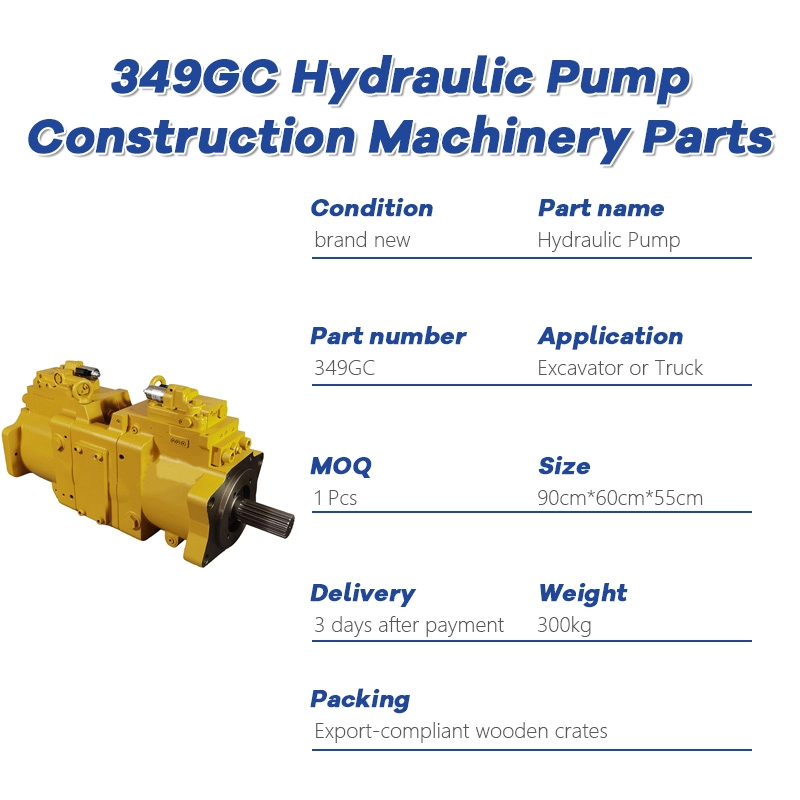
The CAT 349GC hydraulic pump is engineered to deliver efficient and reliable hydraulic power for Caterpillar 349GC excavators. Manufactured using premium materials and precision engineering, this pump is suitable for OEM replacement or high-quality aftermarket upgrades. It ensures smooth hydraulic flow, durability, and optimal performance even in the most demanding working conditions.
-
✔️ Direct fit for CAT 349GC excavators
-
✔️ OEM and aftermarket options available
-
✔️ High-pressure performance for heavy-duty applications
-
✔️ Manufactured with high-strength alloys and quality seals
-
✔️ Tested for reliability and longevity
-
✔️ Fast global shipping and responsive customer support
- 🚜 Order your CAT 349GC Hydraulic Pump now!
📞 Contact us for bulk pricing, customization, and technical support.
📦 Worldwide shipping available. OEM & aftermarket options.
336D Excavator Hydraulic Pump | Heavy Duty CAT Replacement
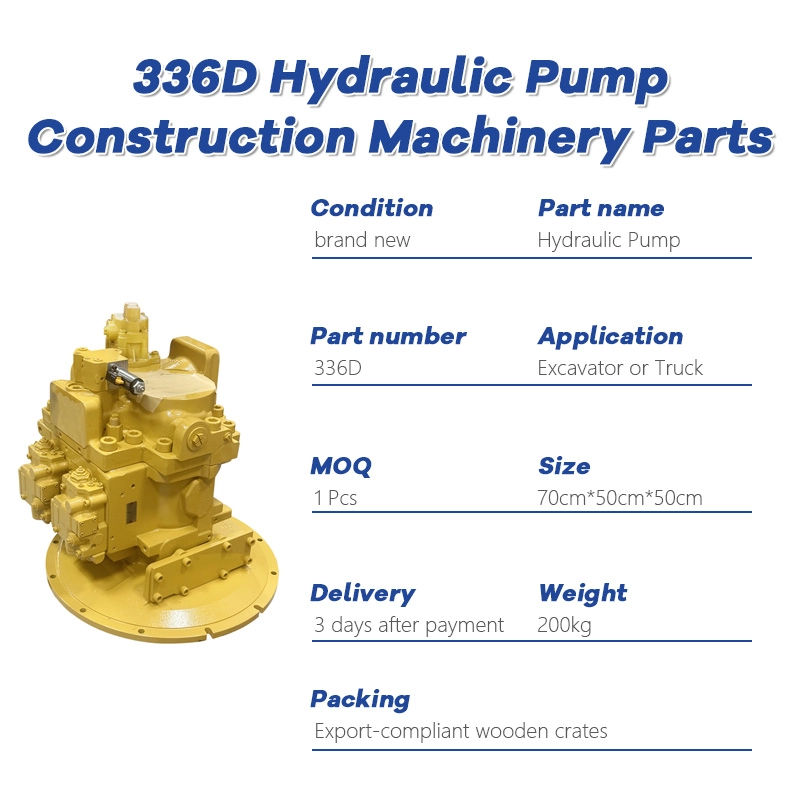
This CAT 336D hydraulic pump is built for power, durability, and optimal performance. It is designed to fit Caterpillar 336D excavators and is available in both OEM and high-quality aftermarket versions. Whether you're replacing a damaged pump or upgrading your hydraulic system, this part ensures long-lasting and reliable operation in demanding construction environments.
-
✔️ Direct fit for CAT 336D excavators
-
✔️ Available in OEM or premium aftermarket
-
✔️ High-pressure performance for heavy-duty operations
-
✔️ Smooth and efficient hydraulic flow
-
✔️ Rigorously tested for quality and durability
-
✔️ Global shipping and responsive support
-
Get in touch with us
If you have any comments or good suggestions, please leave us a message, later our professional staff will contact you as soon as possible.
To be a happy enterprise in the field of engineering equipment.
Weihuparts delivers efficient and reliable service at each stage to meet the customer's needs.