

jackhuang5919@gmail.com
Hydraulic Oil Recommendations for 336D Excavator Pumps
Practical, field-tested hydraulic oil guidance for CAT 336D excavator hydraulic pumps. Learn recommended viscosity grades, cleanliness targets, additive choices, seasonal adjustments, filtration practices, and troubleshooting tips to maximize life and performance of your 336D Excavator Hydraulic Pump | Heavy Duty CAT Replacement.
- Optimizing Hydraulic Oil for Peak Pump Performance
- Why oil choice matters for the hydraulic pump
- Recommended base oil types and viscosity ranges
- Industry references and standards
- Choosing the Right Oil Grade and Additives
- Anti-wear versus EP additives
- Additives that matter: detergents, anti-foam, and viscosity improvers
- Compatibility and seal health
- Hydraulic Filtration, Cleanliness, and Maintenance
- Filtration targets and clean oil practice
- Recommended filtration setup
- Fluid sampling and laboratory analysis
- Seasonal Adjustments, Troubleshooting, and Field Tips
- Cold-weather start-up strategies
- Common symptoms, causes and corrective actions
- When to consider replacing the pump
- Product Fit and Purchasing Considerations
- About the 336D Excavator Hydraulic Pump | Heavy Duty CAT Replacement
- Buying tips
- Installation and break-in guidance
- Authoritative References
- FAQ — Hydraulic Oil and 336D Hydraulic Pump
- Q: What viscosity oil should I use in a CAT 336D hydraulic pump?
- Q: How often should I change the hydraulic oil?
- Q: Can I mix OEM fluid with aftermarket hydraulic oil?
- Q: How do I diagnose cavitation at the pump?
- Q: Is a High Quality aftermarket 336D hydraulic pump as reliable as OEM?
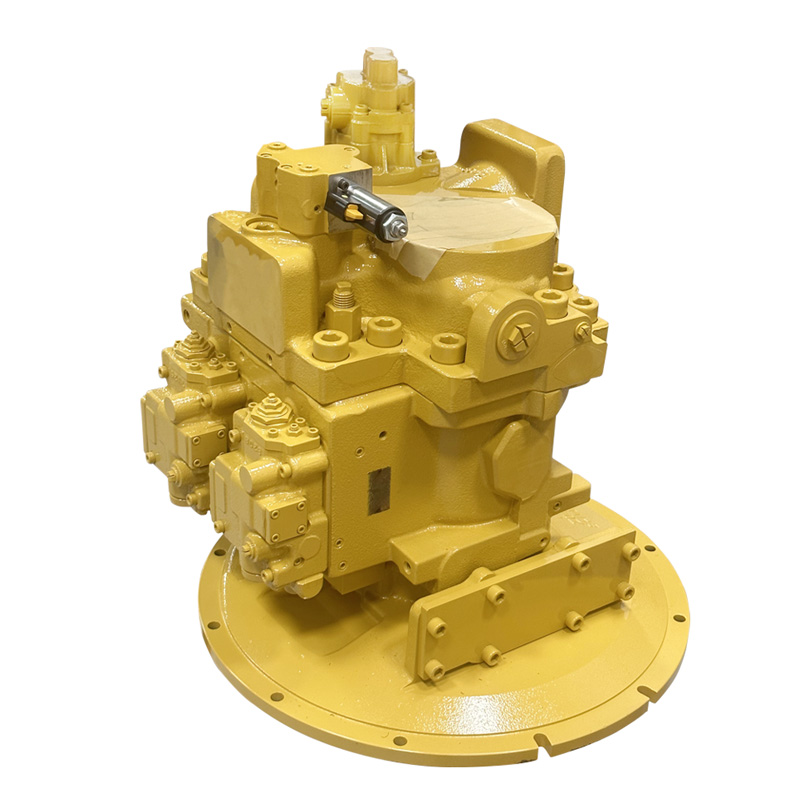
Proper hydraulic oil selection and maintenance are essential to protect the hydraulic pump, extend service intervals, and ensure consistent performance for the 336D Excavator Hydraulic Pump | Heavy Duty CAT Replacement. This guide provides actionable recommendations—viscosity, cleanliness (ISO codes), additive types, seasonal adjustments, and filtration best practices—backed by industry standards and field experience so fleet managers and technicians can keep hydraulic systems reliable in harsh construction environments.
Optimizing Hydraulic Oil for Peak Pump Performance
Why oil choice matters for the hydraulic pump
The hydraulic pump is the heart of the hydraulic system in a CAT 336D excavator. Selecting the correct hydraulic fluid affects pump wear, volumetric efficiency, thermal stability, and responsiveness. The right oil reduces cavitation, minimizes metal-to-metal contact in axial piston pumps, and preserves seals and hoses from premature aging. For the CAT 336D, which often uses high-pressure axial-piston pumps, oil must deliver stable film strength under heavy loads and resist shear thinning during extended operation.
Recommended base oil types and viscosity ranges
For most 336D applications, high-quality anti-wear (AW) hydraulic oils based on Group II or III mineral base stocks or synthetic blends are preferred. Typical viscosity grades and field recommendations:
- ISO VG 46: Default choice for moderate climates and most heavy-duty construction work. Balances protection and efficiency.
- ISO VG 68: Consider when ambient temperatures are higher or when the machine runs long cycles with high heat load.
- ISO VG 32: Use in very cold climates or winter start-up conditions to ensure adequate cold flow and pump priming.
Many manufacturers recommend a viscosity index (VI) improver to maintain viscosity across temperature ranges to reduce starting wear and high-temperature thinning. Always consult the OEM product manual as a baseline and then adapt using field data.
Industry references and standards
Hydraulic cleanliness and fluid specifications are governed by industry standards. For example, ISO 4406 describes particulate contamination codes that directly relate to pump life and system reliability. More on ISO 4406: ISO 4406 (Wikipedia). The general science behind hydraulic fluids is summarized here: Hydraulic fluid (Wikipedia).
Choosing the Right Oil Grade and Additives
Anti-wear versus EP additives
Most excavator hydraulic pumps benefit from anti-wear (AW) ZDDP-containing formulations rather than extreme pressure (EP) gear oils. AW hydraulic oils protect pump bearings and piston assemblies without the aggressive chemistry EP additives may introduce (e.g., sulfur-phosphorus compounds at high concentrations can affect yellow metals and certain seals). Choose an AW hydraulic fluid meeting manufacturer viscosity recommendations and shear stability.
Additives that matter: detergents, anti-foam, and viscosity improvers
Key additive functions for excavator hydraulic systems include:
- Anti-foam: Prevents aeration and reduces cavitation risk at the pump inlet.
- Rust and corrosion inhibitors: Important for equipment stored or operated in humid or marine environments.
- Oxidation inhibitors: Extend oil life under high temperature cycling.
- Viscosity index improvers: Improve temperature performance but be mindful of shear stability; cheap VI improvers can shear out, reducing film strength.
For High Quality results, consider OEM-approved or high-quality aftermarket hydraulic oils from major suppliers (Mobil, Shell, Chevron) that publish technical data sheets showing ASTM performance and compatibility with seal materials.
Compatibility and seal health
Before changing fluid types, confirm compatibility with system seals, hoses, and paint. Switching from a synthetic ester-based fluid to a mineral oil, or vice versa, often necessitates a full system flush and seal inspection. Consult material compatibility charts and the hydraulic pump vendor to minimize risk of seal swelling or shrinkage.
Hydraulic Filtration, Cleanliness, and Maintenance
Filtration targets and clean oil practice
Particle contamination is one of the leading causes of hydraulic pump failure. For the 336D hydraulic pump, aim for ISO cleanliness codes of 17/14/11 or better at the pump inlet when possible; high-performing fleets target 16/13/10. Improved filtration increases pump life dramatically. For reference and further reading about common filtration practices, see this technical overview: Hydraulic fluid selection and filtration (Machinery Lubrication).
Recommended filtration setup
Practical filtration and maintenance steps:
- Use a high-quality return-line filter rated at or below 10 micron absolute (beta>100) and a pressure-compensated in-line filter or suction strainer to protect the pump inlet.
- Install a bypass/psv relief with a cleanliness monitor or a visual indicator for differential pressure to schedule changes based on condition rather than fixed intervals.
- Perform regular oil analysis (every 250–500 hours) to track viscosity, TBN, water, and particle counts. Trending these values prevents surprises.
Fluid sampling and laboratory analysis
Oil analysis is one of the most cost-effective predictive maintenance tools. Tests to request include: particle count (ISO 4406), ferrous density, viscosity @40/100°C, acid number, and water content. Use results to adjust filter micron ratings, change intervals, and to diagnose abnormal wear or contamination sources.
Seasonal Adjustments, Troubleshooting, and Field Tips
Cold-weather start-up strategies
Cold ambient temperatures increase fluid viscosity and can produce cavitation or pump starvation during start-up. Strategies for winter operation:
- Use a lower ISO VG (e.g., 32) or a winter-grade blend to ensure quick priming and avoid high start-up torque on the drive motor.
- Install block heaters or oil sump warmers if machines are stored overnight in freezing conditions.
- Follow slow warm-up procedures—idle the engine and cycle the hydraulics gently until the oil reaches operating temperature.
Common symptoms, causes and corrective actions
Table: Common pump problems and recommended corrective steps
| Symptom | Possible cause(s) | Recommended corrective action |
|---|---|---|
| Noise / whining at pump | Cavitation, air entrainment, low oil level, suction restriction | Check oil level, inspect suction strainer, verify inlet pressure, address air leaks in suction line |
| Overheating | High ambient load, low fluid capacity, contaminated oil, restricted cooling | Improve cooling, replace fluid if oxidized, verify flow through heat exchanger |
| Slow response / reduced power | Low pump displacement, internal wear, low system pressure, wrong viscosity | Conduct pressure tests, oil analysis, and consider pump rebuild/replacement |
When to consider replacing the pump
Signs that a 336D Hydraulic Pump (OEM or high-quality aftermarket) should be replaced include persistent loss of pressure despite corrective maintenance, metal contamination in oil analysis trending upward (high ferrous particulate), catastrophic seal failure, or significant internal leakage found during performance tests. The product '336D Excavator Hydraulic Pump | Heavy Duty CAT Replacement' is designed as a direct-fit solution for rapid field replacement and is rigorously tested for heavy-duty operations.
Product Fit and Purchasing Considerations
About the 336D Excavator Hydraulic Pump | Heavy Duty CAT Replacement
This CAT 336D hydraulic pump is built for power, durability, and optimal performance. It is designed to fit Caterpillar 336D excavators and is available in both OEM and high-quality aftermarket versions. Whether you're replacing a damaged pump or upgrading your hydraulic system, this part ensures long-lasting and reliable operation in demanding construction environments.
- ✔️ Direct fit for CAT 336D excavators
- ✔️ Available in OEM or High Quality aftermarket
- ✔️ High-pressure performance for heavy-duty operations
- ✔️ Smooth and efficient hydraulic flow
- ✔️ Rigorously tested for quality and durability
- ✔️ Global shipping and responsive support
Buying tips
When purchasing a replacement hydraulic pump for a 336D, verify these items:
- Part number and serial compatibility with your machine.
- Warranty terms and whether installation support or tech documentation is provided.
- Supplier references and whether the pump meets or exceeds OEM specifications for displacement and pressure.
Installation and break-in guidance
After installing a new pump:
- Flush the hydraulic system or follow the OEM flushing procedure to remove contaminants.
- Use recommended hydraulic oil and fill to specified level.
- Run the hydraulic system at low load for the initial break-in period (follow OEM hours guideline, typically 2–8 hours) to seat internal components and stabilize clearances.
Authoritative References
For more technical detail on hydraulic systems and contamination control, consult:
- Hydraulic pump—Wikipedia (overview of pump types and principles)
- Hydraulic fluid—Wikipedia (properties and fluid types)
- ISO 4406—Wikipedia (particle count standard)
- Hydraulic fluid selection and contamination control—Machinery Lubrication
FAQ — Hydraulic Oil and 336D Hydraulic Pump
Q: What viscosity oil should I use in a CAT 336D hydraulic pump?
A: Use ISO VG 46 as the baseline for most climates. Move to ISO VG 32 for severe cold or ISO VG 68 for high ambient temperatures and sustained heavy loading. Always follow the excavator’s service manual and balance viscosity with your filtration and pump inlet conditions.
Q: How often should I change the hydraulic oil?
A: Change intervals depend on working conditions. For heavy-duty construction, schedule fluid analysis every 250–500 hours. Many operators change fluid between 1,000–2,000 hours depending on analysis results, oxidation level, and contamination. Replace filters regularly (return-line filter 10µm absolute recommended) and monitor differential pressure indicators.
Q: Can I mix OEM fluid with aftermarket hydraulic oil?
A: Mixing is possible if both fluids share compatible base stocks and additive chemistries, but avoid mixing mineral and synthetic ester fluids without a full flush. When in doubt, perform a compatibility test or consult the fluid supplier and equipment OEM.
Q: How do I diagnose cavitation at the pump?
A: Symptoms include whining noise, reduced flow, and vibration. Check suction line for air leaks, verify oil level and temperature, inspect suction strainer, and ensure the pump inlet is not restricted. Rectify inlet pressure issues before replacing the pump.
Q: Is a High Quality aftermarket 336D hydraulic pump as reliable as OEM?
A: High-quality aftermarket pumps can match OEM performance if manufactured to the same tolerances and materials and backed by warranty. Choose certified vendors with test reports and positive references. The '336D Excavator Hydraulic Pump | Heavy Duty CAT Replacement' offers both OEM-fit and High Quality aftermarket options designed for durability and heavy use.
If you have additional questions, want help selecting the correct hydraulic oil or filters, or need to order the 336D Excavator Hydraulic Pump | Heavy Duty CAT Replacement, contact our support team or view the product page to get immediate assistance and shipping options.
Contact us: For technical support, quotes, and fast worldwide shipping, contact our sales team or view the 336D Excavator Hydraulic Pump product page.
Tags
hydraulic ram pump
hydraulic ram pump
Deutz BF4M2012 engine
Deutz BF4M2012 engine
Carter C2.4 engine
Carter C2.4 engine
Carter 320D2 C7.1 excavator engine supplier
Carter 320D2 C7.1 excavator engine supplier
QSL8.9 engine supplier
QSL8.9 engine supplier
HPV145 hydraulic piston pump
HPV145 hydraulic piston pump
Recommended for you
Excavator Engine Noise: Diagnosis and Reduction Tips
Hydraulic Pump Calibration and Testing Procedures 2026

Procurement Risk Assessment for Large Diesel Engine Orders
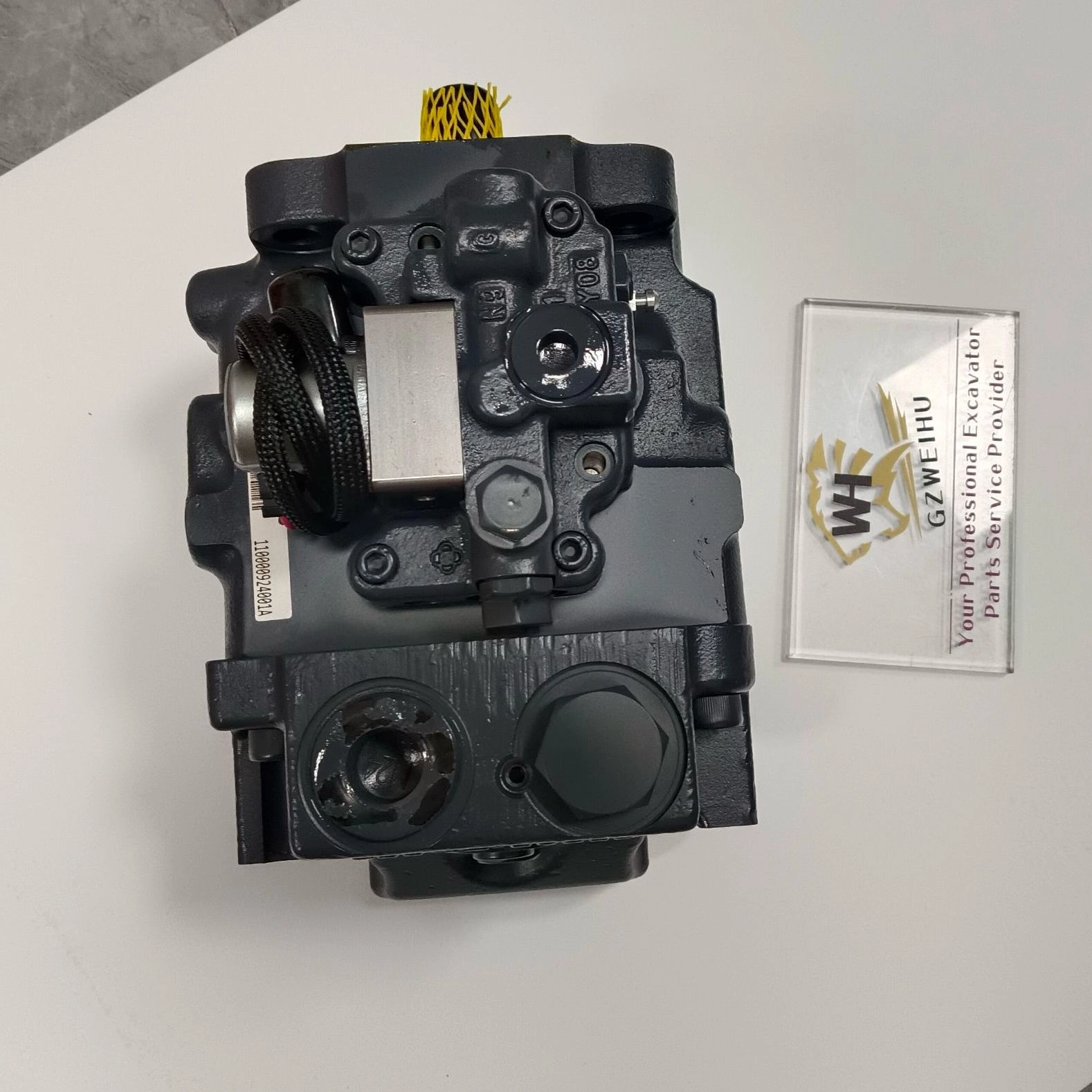
How High-Performance Main Pumps Improve DX65 Efficiency
Prdoucts Categories
Question you may concern
FAQ
Do you offer bulk purchasing options?
Yes, we offer competitive pricing for bulk orders. If you are interested in purchasing large quantities of parts, please contact our sales team to discuss your requirements and receive a customized quote.
What types of excavator parts do you offer?
Weihuparts provides a comprehensive range of excavator parts, including but not limited to buckets, hydraulic components, undercarriage parts, and engine components. Our goal is to be your one-stop solution for all excavator needs.
Do you provide installation services for your parts?
While we do not offer installation services directly, we can recommend qualified professionals or resources to assist you with the installation of our parts. Our customer support team can provide guidance on finding local service providers.
Can I return or exchange parts if I change my mind?
Yes, we accept returns and exchanges within [insert return period, e.g., 30 days] of purchase. The items must be unused and in their original packaging. Please contact our customer service team to initiate a return or exchange.
Are your parts compatible with all excavator brands?
Weihuparts strives to offer parts compatible with a wide range of excavator brands and models. However, we recommend checking the product specifications or consulting with our team to ensure compatibility with your specific excavator.
You may also like
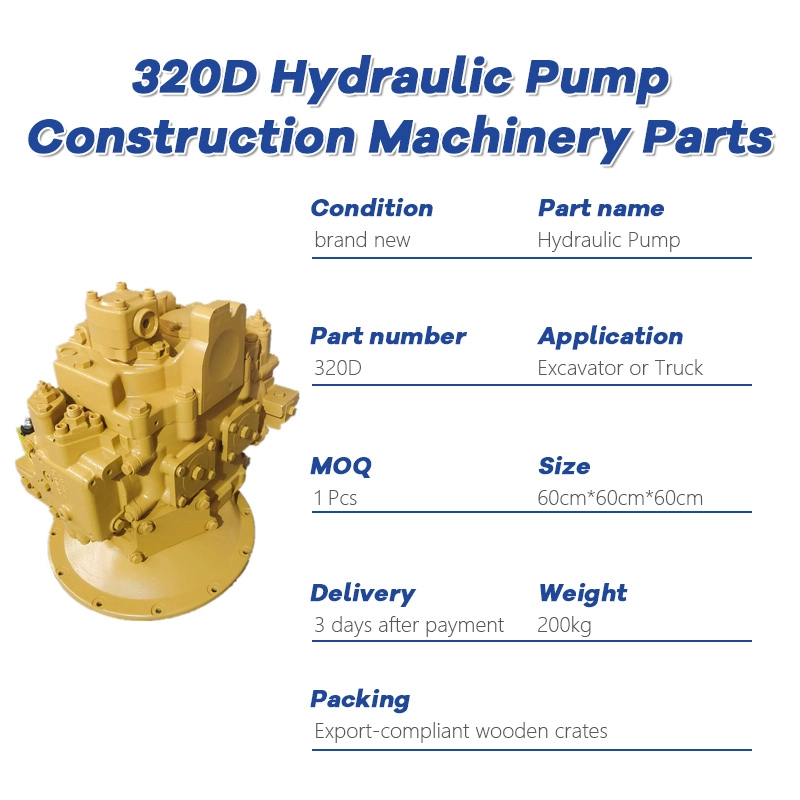
CAT 320D SBS120 Hydraulic Pump for Excavator | High Quality Replacement
This high-performance SBS120 hydraulic pump is specially designed for the CAT 320D excavator. Built with premium materials and precision manufacturing, it ensures reliable power delivery and long-lasting performance in tough construction environments. Ideal as an OEM replacement or aftermarket solution, this pump supports your hydraulic system with smooth, efficient operation.
-
Fits: Caterpillar 320D
-
Model: SBS120
-
Application: Excavator main hydraulic pump
-
Condition: New / Aftermarket available
-
Warranty: 6-12 months (optional)
-
Worldwide shipping available
-
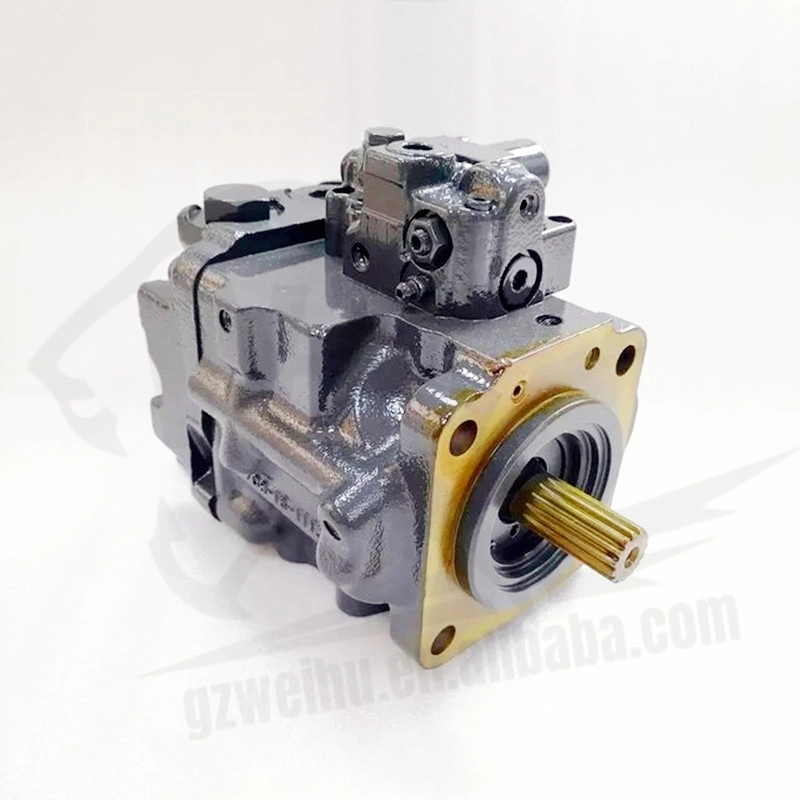
Doosan DX65 Excavator Hydraulic Pump | High-Performance Main Pump
The DX65 hydraulic pump is designed for Doosan DX65 mini excavators, delivering reliable and consistent hydraulic power for smooth machine operation. Whether you're replacing a worn pump or upgrading for enhanced performance, our OEM and aftermarket DX65 pumps offer durability, compatibility, and affordability. Each pump is manufactured using high-quality materials and precision engineering, ensuring long service life and reduced downtime.
-
✔️ 100% fit for Doosan DX65 excavators
-
✔️ Axial piston pump – compact and powerful
-
✔️ OEM & high-quality aftermarket versions available
-
✔️ Tested for pressure, performance & fluid consistency
-
✔️ Precision-sealed with robust alloy components
-
✔️ Global shipping with safe wooden packaging
- 🚜 Order Your Doosan DX65 Hydraulic Pump Today – Performance You Can Trust
📞 Contact Us for stock availability, bulk pricing, or compatibility check
🌍 Fast Global Shipping | OEM & Aftermarket | Secure Payment Options -
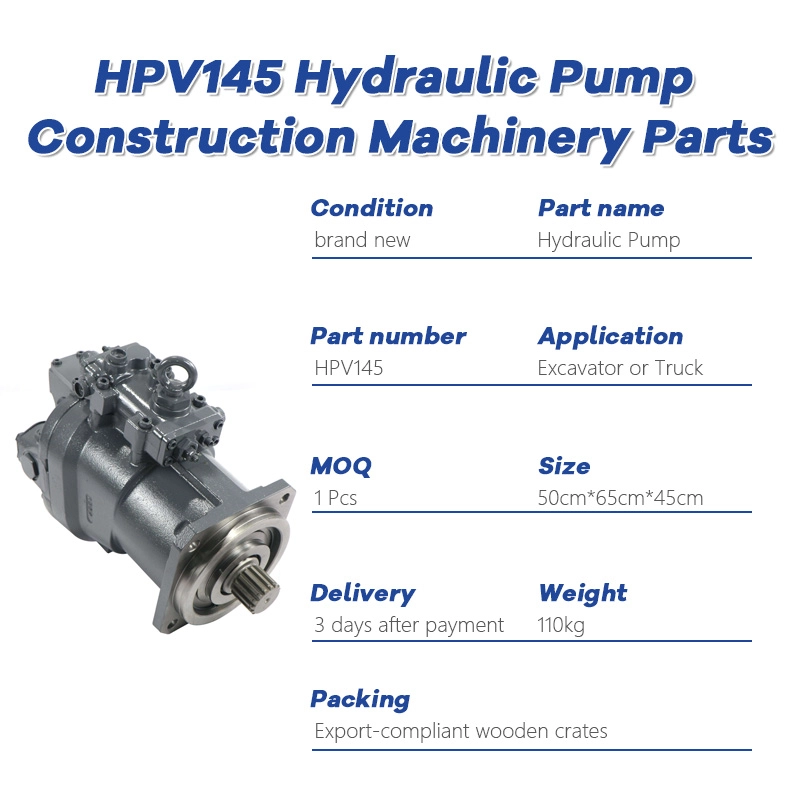
HPV145 Hydraulic Pump (Direct Injection) | Excavator Main Pump Replacement
The HPV145 single pump with direct injection technology is designed for excavators and heavy-duty machinery requiring precise hydraulic control and efficient power delivery. Combining advanced direct injection control with durable axial piston pump construction, this model ensures high performance, long service life, and reliable operation. Available in OEM and aftermarket versions, it is ideal for replacement or system upgrades.
-
✔️ Direct injection electronic control for precise hydraulic output
-
✔️ Suitable for excavators and various heavy machinery
-
✔️ High-pressure axial piston single pump design
-
✔️ OEM and aftermarket options for flexibility and cost-effectiveness
-
✔️ Robust materials and quality seals for long-term durability
-
✔️ Fast worldwide shipping and comprehensive technical support
- 🛒 Order Your HPV145 Direct Injection Single Pump Today – Precision, Durability & Performance
📞 Contact Us for pricing, availability, and technical support
🌍 Fast Global Shipping | OEM & Aftermarket | Secure Payment Options -
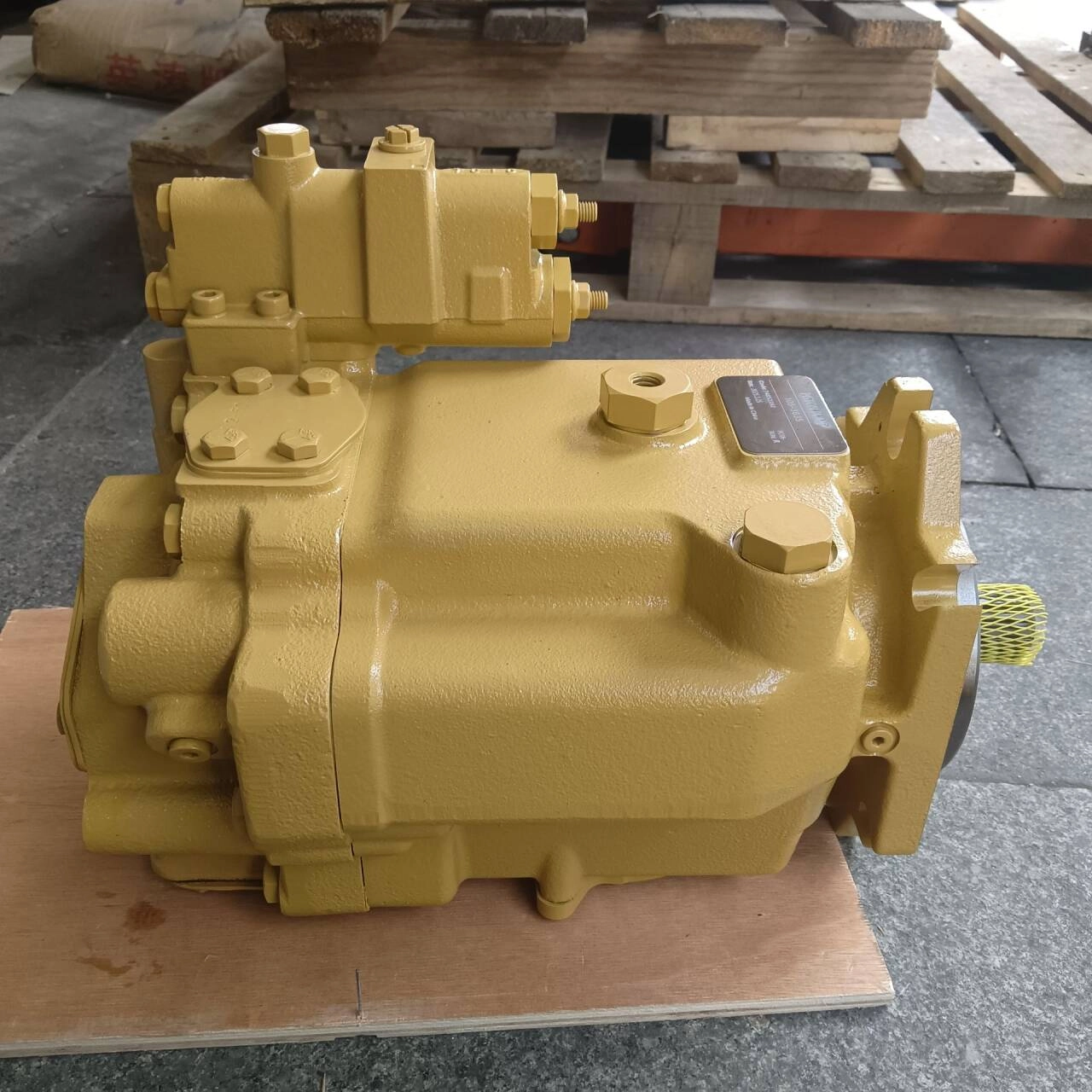
CAT 980H Hydraulic Pump | Heavy-Duty Loader Replacement Part
The CAT 980H and 980G hydraulic pumps are engineered to provide optimal hydraulic power and durability for Caterpillar loaders. Built with premium materials and precision manufacturing, these pumps are ideal for OEM replacements and high-quality aftermarket upgrades. They ensure smooth hydraulic operation and reliable performance in demanding construction environments.
-
✔️ Direct fit for CAT 980H and 980G loaders
-
✔️ Available in OEM and aftermarket versions
-
✔️ High-pressure, heavy-duty hydraulic performance
-
✔️ Manufactured with high-strength alloys and quality seals
-
✔️ Tested for durability and efficiency
-
✔️ Fast global shipping and excellent customer support
- 🛒 Order your CAT 980H & 980G Hydraulic Pump now!
📞 Contact us for bulk orders, technical support, or custom requests.
📦 Fast worldwide shipping | OEM & aftermarket options available -
Get in touch with us
If you have any comments or good suggestions, please leave us a message, later our professional staff will contact you as soon as possible.
To be a happy enterprise in the field of engineering equipment.
Weihuparts delivers efficient and reliable service at each stage to meet the customer's needs.