

jackhuang5919@gmail.com
Fuel Efficiency Insights for ZAX870-5G 6WG1 Diesel Engine
Practical, expert guidance on maximizing fuel efficiency for the ZAX870-5G 6WG1 Direct Injection Diesel Engine fitted to Hitachi excavators. Covers combustion design, operator techniques, maintenance best practices, TCO comparisons, and why this Isuzu-based unit is a top choice among the best diesel engine options for heavy-duty earthmoving.
- Why ZAX870-5G 6WG1 Excels in Fuel Efficiency
- Direct injection and combustion stability
- Combustion control and electronic management
- Mechanical robustness translating to consistent efficiency
- Operator Practices and Machine Settings to Maximize MPG (or L/hr)
- Operator technique: cycle optimization
- Machine settings and intelligent systems
- Load matching and auxiliary systems
- Maintenance, Fuel Quality, and Aftertreatment: Preventing Efficiency Drift
- Regular maintenance items that preserve fuel economy
- Fuel quality, filtration, and contamination control
- Aftertreatment and emission systems impact on consumption
- Performance and Cost Comparison: ZAX870-5G 6WG1 vs. Other Heavy-Duty Diesel Engines
- Total Cost of Ownership (TCO) considerations
- Data logging and benchmarking
- Brand & Supplier Advantages: Why Choose Hitachi Original Engines and the 6WG1 Family
- OEM integration and system-level optimization
- Parts availability and authorized service
- Sustainability, regulations, and resale value
- Implementation Checklist: Steps to Realize Fuel Savings with ZAX870-5G 6WG1
- FAQ
- Q1: Is the ZAX870-5G 6WG1 the best diesel engine for my excavator fleet?
- Q2: How much fuel can I realistically save by switching to or properly maintaining a ZAX870-5G 6WG1?
- Q3: What routine services have the biggest impact on fuel efficiency?
- Q4: Are there compatibility concerns when sourcing a ZAX870-5G 6WG1 from an aftermarket supplier?

Fuel efficiency is a critical factor for heavy excavator operations—reducing fuel consumption lowers operating costs, extends machine uptime, and reduces emissions. This article provides in-depth, practical fuel-efficiency insights for the ZAX870-5G 6WG1 Direct Injection Diesel Engine, the original engine supplied for Hitachi heavy-duty excavators. Content is written for fleet managers, site supervisors, service technicians, and operators who want to extract the best performance and return on investment from the ZAX870-5G platform.
ZAX870-5G 6WG1 Direct Injection Diesel Engine – Reliable Power for Hitachi Excavators
Product Overview:
The ZAX870-5G 6WG1 Direct Injection Engine is a high-performance diesel engine designed for Hitachi heavy-duty excavators. Powered by Isuzu’s 6WG1 engine technology, it delivers exceptional fuel efficiency, stable combustion, and outstanding durability — ensuring continuous operation even in the toughest working conditions.
Why ZAX870-5G 6WG1 Excels in Fuel Efficiency
Direct injection and combustion stability
The ZAX870-5G 6WG1 uses direct injection architecture that places fuel into the combustion chamber with precision, improving atomization and reducing incomplete combustion. Direct injection, compared with older indirect injection designs, typically improves thermal efficiency and reduces specific fuel consumption, which is one reason operators often cite this Isuzu-based configuration among the best diesel engine choices for heavy equipment. For background on diesel engine thermodynamic efficiency, see the Diesel engine overview on Wikipedia: https://en.wikipedia.org/wiki/Diesel_engine.
Combustion control and electronic management
Modern implementations of the 6WG1 frequently integrate electronic engine management systems that precisely control injection timing, quantity, and, where applicable, turbocharger boost. These controls enable the engine to maintain stable combustion across load ranges, improving both instantaneous fuel economy and long-term consistency. Precise control reduces unburned fuel and lowers fuel consumption in variable duty cycles common on construction sites.
Mechanical robustness translating to consistent efficiency
Fuel efficiency isn't only about peak thermodynamic efficiency; mechanical condition is equally important. The 6WG1 family is designed for heavy-duty cycles and long maintenance intervals, which helps maintain nominal fuel consumption over time. A well-serviced ZAX870-5G that retains proper compression, timing, and clean induction/exhaust paths will outperform a neglected unit even if both are the same model.
Operator Practices and Machine Settings to Maximize MPG (or L/hr)
Operator technique: cycle optimization
Operator behavior drives large portions of fuel consumption. Techniques to reduce fuel per cycle include minimizing unnecessary idle time, matching engine RPM to hydraulic demand (using economy or auto-idle modes where available), and smooth cycle execution (avoid aggressive high-RPM digging strokes when not needed). Training operators to plan movements and reduce no-load travel will produce the fastest payback on fuel savings.
Machine settings and intelligent systems
Many Hitachi ZAX series machines offer machine control options that optimize hydraulic flow and engine load. Activating eco/auto modes and ensuring throttle maps are correctly configured for the work type (e.g., trenching vs. ripping) can reduce fuel burn by restricting engine speed to the minimum needed for the task. Onboard diagnostics allow calibration and logging, enabling fleet managers to refine settings fleet-wide.
Load matching and auxiliary systems
Match the machine and attachment to the job. Oversized attachments increase engine load and fuel consumption. Use hydraulic flow control valves and, when practical, implement power-limiting modes during light-duty operations. Where auxiliary systems (e.g., compressors, pumps, heaters) are used, isolate or shut them down when not required to avoid hidden parasitic fuel losses.
Maintenance, Fuel Quality, and Aftertreatment: Preventing Efficiency Drift
Regular maintenance items that preserve fuel economy
Key service items include timely fuel and air filter replacement, correct injector calibration and cleaning, maintaining turbocharger cleanliness and bearing health, and ensuring proper valve and injection timing. Clogged air filters, fouled injectors, or degraded turbo performance can increase fuel consumption dramatically. Following the manufacturer's recommended maintenance intervals preserves factory fuel-efficiency ratings.
Fuel quality, filtration, and contamination control
Using clean fuel with proper cetane and removing water and particulates through good filtration is critical. Microbial contamination and water in fuel increase injector wear and combustion instability. Install fuel polishing or additional filtration for sites with suspect fuel supply, and test bulk fuel periodically. Good filtration reduces downtime and helps maintain the ZAX870-5G’s optimized fuel map.
Aftertreatment and emission systems impact on consumption
Modern diesel engines often use EGR, DOC, DPF, and SCR technologies to meet emissions regulations. Properly functioning aftertreatment systems minimize backpressure and avoid regeneration issues that can temporarily increase fuel use. Adhering to the OEM's guidance for regeneration and dosing intervals prevents excess fuel use and prolongs component life. For official guidance on emissions technologies, see the U.S. EPA resources on diesel emissions: https://www.epa.gov/diesel-fuel-standards.
Performance and Cost Comparison: ZAX870-5G 6WG1 vs. Other Heavy-Duty Diesel Engines
Below is a concise, practical comparison table of factors that most influence fuel performance and ownership cost. Values are qualitative, reflecting expected real-world outcomes when engines are properly operated and maintained.
| Characteristic | ZAX870-5G 6WG1 (Isuzu-based) | Generic Older Indirect Injection Engines | Modern High-Pressure Common-Rail Engines |
|---|---|---|---|
| Fuel efficiency (typical) | High (direct injection + tuned management) | Medium-Low (less efficient combustion) | High (very precise injection control) |
| Combustion stability | High | Medium | Very High |
| Serviceability | High (OEM parts & service network) | Variable | Medium-High (advanced diagnostics required) |
| Long-term TCO | Competitive (lower fuel + OEM support) | Higher (fuel + more frequent rebuilds) | Competitive-High (fuel efficient but costly repairs) |
Notes: The ZAX870-5G's Isuzu 6WG1 lineage brings a balance of direct-injection efficiency and proven mechanical durability. While modern high-pressure common-rail systems can match or exceed peak efficiency, their complexity can raise service costs. Choosing the best diesel engine depends on fleet skillset, service network, and duty cycles.
Total Cost of Ownership (TCO) considerations
TCO is driven by fuel burn, service intervals, parts cost, and resale value. For many heavy-excavation fleets, selecting an OEM original engine such as the ZAX870-5G 6WG1 provided by Hitachi ensures compatibility, validated performance curves, and a predictable parts/service supply chain, reducing unplanned downtime and surprise costs over machine life.
Data logging and benchmarking
Implement telematics and fuel-monitoring systems to benchmark fuel consumption in liters/hour and liters/cubic-meter moved. Use baseline data to identify underperforming machines and operators. Consistent data collection converts the theoretical fuel advantages of the ZAX870-5G into measurable fleet savings.
Brand & Supplier Advantages: Why Choose Hitachi Original Engines and the 6WG1 Family
OEM integration and system-level optimization
Choosing an original Hitachi-supplied ZAX870-5G 6WG1 ensures the engine control unit, hydraulic control, cooling, and installation packaging are tuned as an integrated system. System-level optimization reduces mismatches that can otherwise degrade fuel economy or accelerate component wear. Hitachi's product integration approach makes the ZAX870-5G one of the best diesel engine options for fleets that prioritize uptime and consistent fuel performance. (See Hitachi Construction Machinery product information: https://www.hitachicm.com/global/products/.)
Parts availability and authorized service
Original-engine suppliers typically maintain parts inventories and trained service networks. Using OEM parts and certified technicians helps preserve factory fuel-consumption rates and emission compliance. For background on manufacturer benefits, review Hitachi's global support resources: https://www.hitachicm.com/global/support/.
Sustainability, regulations, and resale value
An engine that maintains emissions controls and performs efficiently will retain higher resale value and reduce regulatory risk. When comparing engines, factor in future emissions rules and fuel-economy standards. The ZAX870-5G 6WG1, as supplied by Hitachi, is engineered to align with typical heavy-equipment requirements for durability and compliance.
Implementation Checklist: Steps to Realize Fuel Savings with ZAX870-5G 6WG1
- Baseline fuel consumption with telematics (establish liters/hour and liters/unit-of-work).
- Train operators on eco modes, reduced idle, and optimized cycles.
- Follow OEM maintenance schedule: filters, injectors, turbo, and cooling system.
- Monitor fuel quality and add filtration/polishing where needed.
- Use OEM parts and software updates to maintain injection maps and aftertreatment performance.
- Review job assignments and attachment sizing monthly to ensure match with duty cycle.
FAQ
Q1: Is the ZAX870-5G 6WG1 the best diesel engine for my excavator fleet?
A1: 'Best' depends on your priorities. If you need a proven balance of fuel efficiency, durability, and strong OEM support for Hitachi excavators, the ZAX870-5G 6WG1 is an excellent choice. It delivers direct-injection efficiency, integrated system tuning, and a predictable service ecosystem—key attributes many operators seek when selecting the best diesel engine for heavy duty tasks.
Q2: How much fuel can I realistically save by switching to or properly maintaining a ZAX870-5G 6WG1?
A2: Savings vary by current baseline, duty cycle, and operator practice. In many cases, optimizing operator behavior, enabling eco modes, and maintaining filters and injectors can reduce fuel consumption by a meaningful percentage (single-digit to low double-digit ranges in ideal cases). Use telematics to measure your existing baseline and then apply the implementation checklist above to quantify savings for your fleet.
Q3: What routine services have the biggest impact on fuel efficiency?
A3: Air and fuel filter replacement, injector inspection/cleaning or reconditioning, turbocharger inspection, and ensuring correct engine control settings have the largest near-term impact. Addressing these keeps combustion optimal and prevents efficiency drift.
Q4: Are there compatibility concerns when sourcing a ZAX870-5G 6WG1 from an aftermarket supplier?
A4: Using non-OEM or re-manufactured units can be cost-effective but may introduce compatibility or warranty issues. Buying from authorized suppliers or OEM remanufactured programs ensures control software, mounts, and ancillary systems are appropriate for Hitachi machines, preserving fuel performance and reliability.
Once fuel consumption benchmarks are clear, securing consistent performance depends heavily on sourcing, making choosing an original Hitachi engine supplier: ZAX870-5G guide a critical next step.If you have more questions or want a fuel-efficiency audit for your fleet, contact our sales and technical team or view the product page for the ZAX870-5G 6WG1. Contact: sales@example.com. View product details: ZAX870-5G 6WG1 Diesel Engine | Hitachi Excavator Original Engine Supplier.
References & further reading: Diesel engine fundamentals - Wikipedia; Hitachi Construction Machinery products and support - Hitachi; emissions and diesel standards - U.S. EPA.
Author note: This guidance is based on industry best practices and manufacturer integration principles. For machine-specific service schedules and calibration, always consult the Hitachi service manual and certified technicians.
Tags
SBS120 excavator hydraulic pump
SBS120 excavator hydraulic pump
electric hydraulic pressure pump
electric hydraulic pressure pump
C15 engine rebuild kit
C15 engine rebuild kit
Caterpillar 336D hydraulic pump
Caterpillar 336D hydraulic pump
K3V112DT DEKA Hydraulic Pump
K3V112DT DEKA Hydraulic Pump
cummins qsm11 engine for sale
cummins qsm11 engine for sale
Recommended for you

Troubleshooting engine assemblies: noise, smoke, and leaks
Where to Buy excavator spare parts in China

Engine assemblies: Why ZAX870-5G 6WG1 excels in reliability
Maintenance Checklist for ZAX870-5G 6WG1 Diesel Engines
Prdoucts Categories
Question you may concern
FAQ
Can I return or exchange parts if I change my mind?
Yes, we accept returns and exchanges within [insert return period, e.g., 30 days] of purchase. The items must be unused and in their original packaging. Please contact our customer service team to initiate a return or exchange.
How can I place an order?
You can place an order through our user-friendly online platform or by contacting our sales team directly. Simply browse our catalog, select the parts you need, and follow the checkout process to complete your order.
Do you provide warranties on your products?
Yes, we stand by the quality of our products. Most parts come with a warranty that covers manufacturing defects. Please refer to the specific warranty information provided with your purchase or contact our customer service team for details.
Do you offer bulk purchasing options?
Yes, we offer competitive pricing for bulk orders. If you are interested in purchasing large quantities of parts, please contact our sales team to discuss your requirements and receive a customized quote.
What is your shipping policy?
We offer a variety of shipping options to meet your needs. Orders are typically processed within [insert processing time] days, and delivery times may vary based on your location. We will provide you with tracking information once your order has shipped.
You may also like
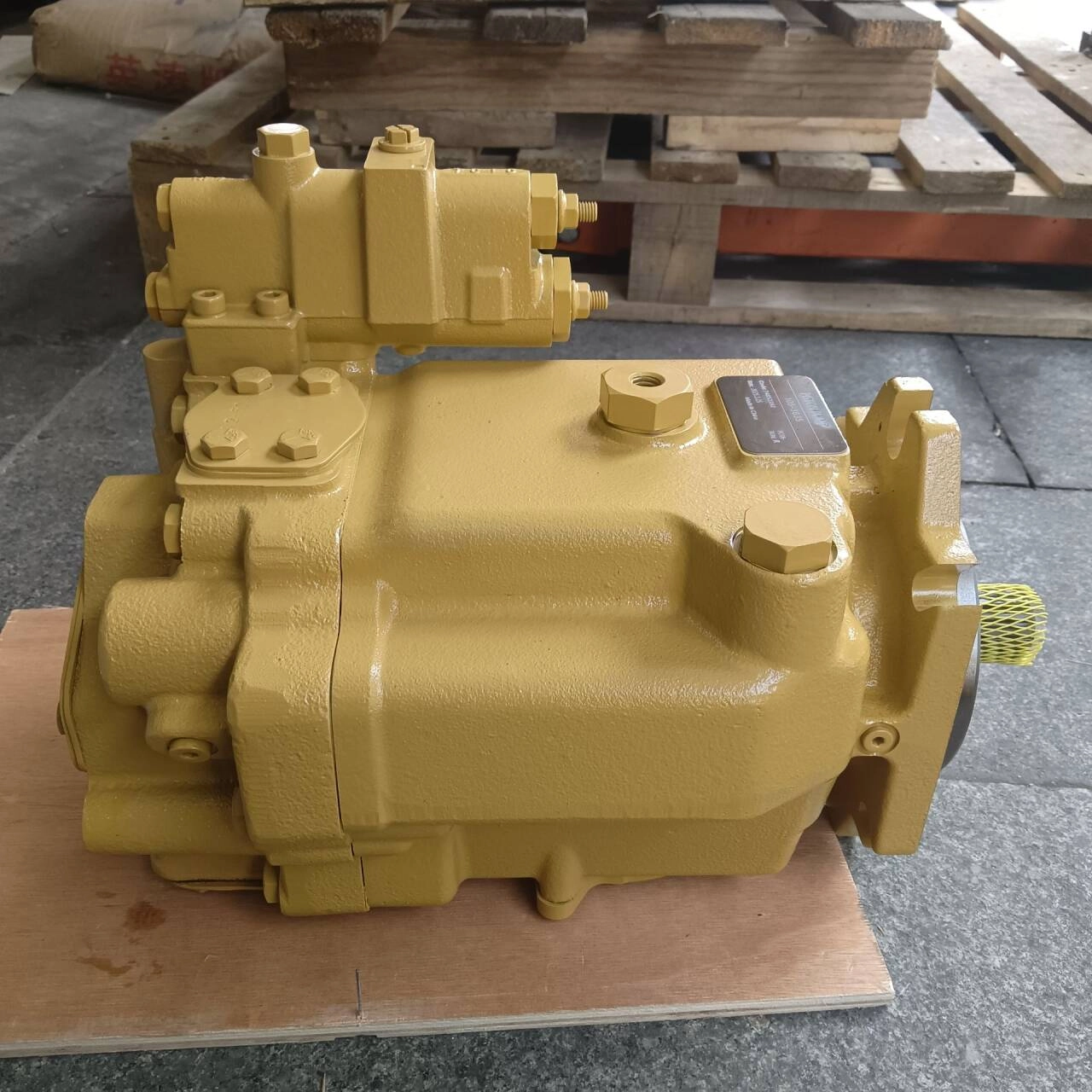
CAT 980H Hydraulic Pump | Heavy-Duty Loader Replacement Part
The CAT 980H and 980G hydraulic pumps are engineered to provide optimal hydraulic power and durability for Caterpillar loaders. Built with premium materials and precision manufacturing, these pumps are ideal for OEM replacements and high-quality aftermarket upgrades. They ensure smooth hydraulic operation and reliable performance in demanding construction environments.
-
✔️ Direct fit for CAT 980H and 980G loaders
-
✔️ Available in OEM and aftermarket versions
-
✔️ High-pressure, heavy-duty hydraulic performance
-
✔️ Manufactured with high-strength alloys and quality seals
-
✔️ Tested for durability and efficiency
-
✔️ Fast global shipping and excellent customer support
- 🛒 Order your CAT 980H & 980G Hydraulic Pump now!
📞 Contact us for bulk orders, technical support, or custom requests.
📦 Fast worldwide shipping | OEM & aftermarket options available -
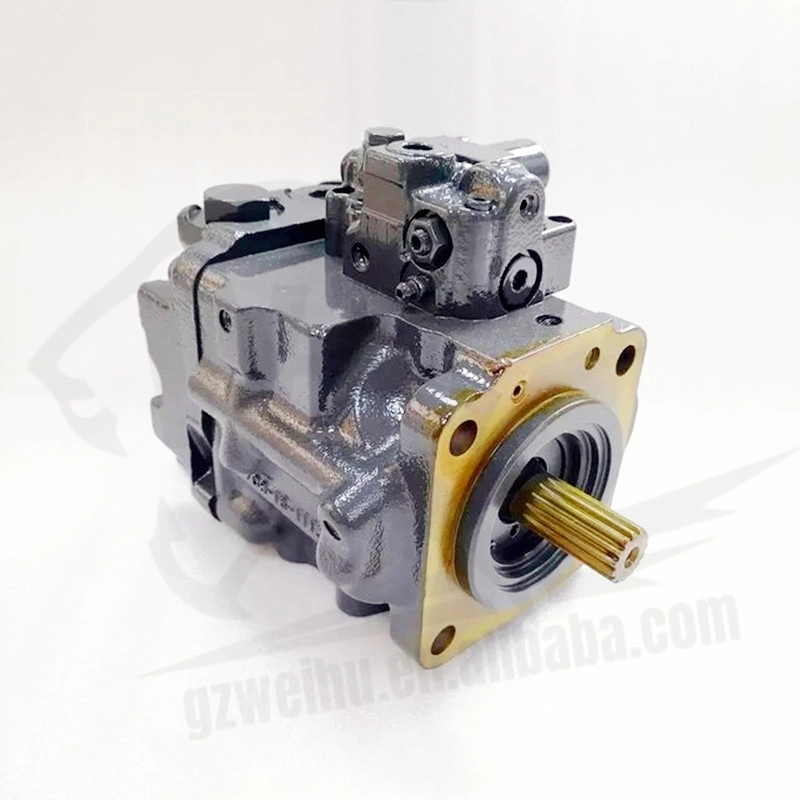
Doosan DX65 Excavator Hydraulic Pump | High-Performance Main Pump
The DX65 hydraulic pump is designed for Doosan DX65 mini excavators, delivering reliable and consistent hydraulic power for smooth machine operation. Whether you're replacing a worn pump or upgrading for enhanced performance, our OEM and aftermarket DX65 pumps offer durability, compatibility, and affordability. Each pump is manufactured using high-quality materials and precision engineering, ensuring long service life and reduced downtime.
-
✔️ 100% fit for Doosan DX65 excavators
-
✔️ Axial piston pump – compact and powerful
-
✔️ OEM & high-quality aftermarket versions available
-
✔️ Tested for pressure, performance & fluid consistency
-
✔️ Precision-sealed with robust alloy components
-
✔️ Global shipping with safe wooden packaging
- 🚜 Order Your Doosan DX65 Hydraulic Pump Today – Performance You Can Trust
📞 Contact Us for stock availability, bulk pricing, or compatibility check
🌍 Fast Global Shipping | OEM & Aftermarket | Secure Payment Options -
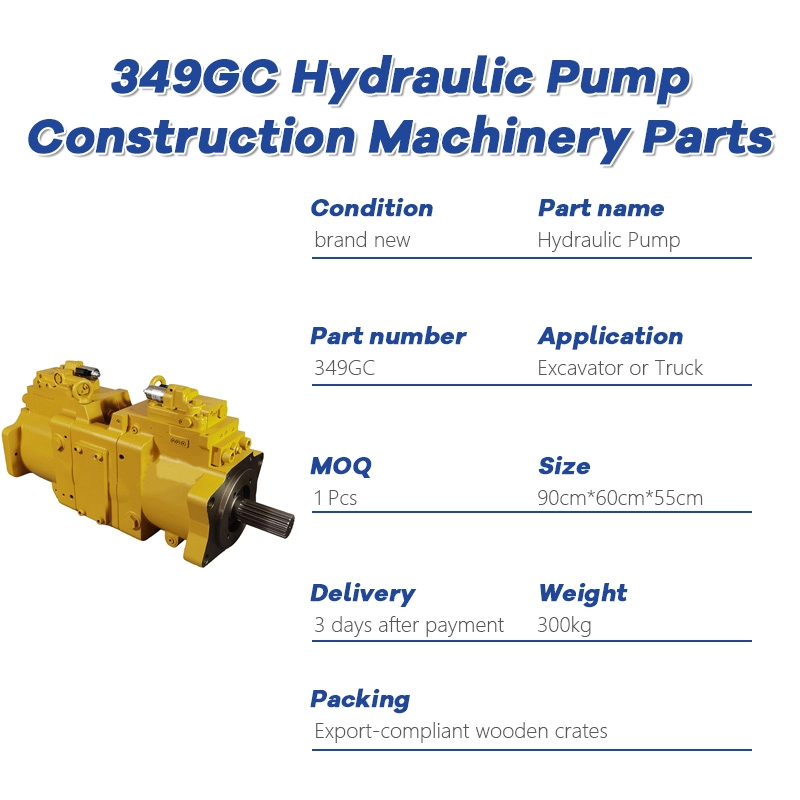
Hydraulic Pump for CAT 349GC | Reliable Performance, Fast Shipping
The CAT 349GC hydraulic pump is engineered to deliver efficient and reliable hydraulic power for Caterpillar 349GC excavators. Manufactured using premium materials and precision engineering, this pump is suitable for OEM replacement or high-quality aftermarket upgrades. It ensures smooth hydraulic flow, durability, and optimal performance even in the most demanding working conditions.
-
✔️ Direct fit for CAT 349GC excavators
-
✔️ OEM and aftermarket options available
-
✔️ High-pressure performance for heavy-duty applications
-
✔️ Manufactured with high-strength alloys and quality seals
-
✔️ Tested for reliability and longevity
-
✔️ Fast global shipping and responsive customer support
- 🚜 Order your CAT 349GC Hydraulic Pump now!
📞 Contact us for bulk pricing, customization, and technical support.
📦 Worldwide shipping available. OEM & aftermarket options.
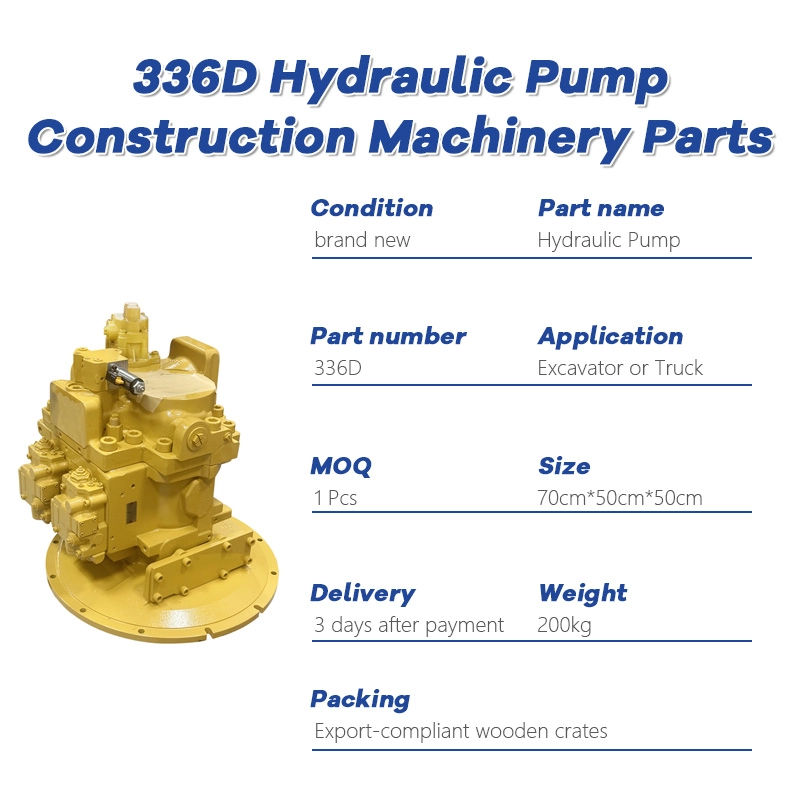
336D Excavator Hydraulic Pump | Heavy Duty CAT Replacement
This CAT 336D hydraulic pump is built for power, durability, and optimal performance. It is designed to fit Caterpillar 336D excavators and is available in both OEM and high-quality aftermarket versions. Whether you're replacing a damaged pump or upgrading your hydraulic system, this part ensures long-lasting and reliable operation in demanding construction environments.
-
✔️ Direct fit for CAT 336D excavators
-
✔️ Available in OEM or premium aftermarket
-
✔️ High-pressure performance for heavy-duty operations
-
✔️ Smooth and efficient hydraulic flow
-
✔️ Rigorously tested for quality and durability
-
✔️ Global shipping and responsive support
-
Get in touch with us
If you have any comments or good suggestions, please leave us a message, later our professional staff will contact you as soon as possible.
To be a happy enterprise in the field of engineering equipment.
Weihuparts delivers efficient and reliable service at each stage to meet the customer's needs.