

jackhuang5919@gmail.com
Best Ways to Extend Hydraulic Pump Lifespan in Excavators 2026
A practical, expert guide on extending hydraulic pump life in excavators. Covers failure causes, contamination control, filtration, fluid selection, system design, predictive monitoring, maintenance schedules, and ROI. Includes tables, OEM-based best practices, and how Weihuparts supports uptime with quality excavator parts.
- Protect Your Excavator's Hydraulic Pump: Practical 2026 Guide
- Why the hydraulic pump matters for excavator uptime — hydraulic pump reliability and excavator spare parts
- Understand common failure modes — hydraulic pump failure causes and diagnostics
- Implement a proactive maintenance program — excavator maintenance and hydraulic pump service
- Filtration and contamination control — hydraulic pump filtration best practices
- Choose the right hydraulic fluid — fluid selection and viscosity control for hydraulic pump longevity
- Prevent cavitation and aeration — suction-line best practices for hydraulic pump protection
- Installation, alignment and component selection — mechanical factors that extend hydraulic pump life
- Predictive monitoring and oil analysis — detect issues before failure
- Cost-benefit: how preventive investment extends pump life — ROI of filtration and monitoring
- Weihuparts: a partner for excavator spare parts and hydraulic pump solutions
- Why choose Weihuparts for hydraulic pump and major assemblies — hydraulic pump, engine assembly, excavator engine
- Practical checklist before replacing or upgrading a hydraulic pump — pre-purchase guide and
- Frequently Asked Questions (FAQ)
- 1. How long should a hydraulic pump in an excavator last?
- 2. Is oil analysis really necessary for excavator hydraulic pumps?
- 3. Can I use a lower-cost aftermarket hydraulic pump?
- 4. What ISO cleanliness code should I aim for?
- 5. How do I know if my pump is cavitating?
- 6. What immediate steps should I take when a pump begins showing signs of trouble?
- References
Protect Your Excavator's Hydraulic Pump: Practical 2026 Guide
Why the hydraulic pump matters for excavator uptime — hydraulic pump reliability and excavator spare parts
The hydraulic pump is the heart of any excavator: it delivers pressure and flow that power the boom, arm, bucket, travel motors and attachments. When a hydraulic pump fails, downtime multiplies — lost production, emergency repairs, and secondary damage to valves and motors. Extending the working life of the hydraulic pump is therefore a high-impact way to reduce operating costs and keep projects on schedule. This guide explains proven, verifiable methods to maximize pump life in 2026 and beyond.
Understand common failure modes — hydraulic pump failure causes and diagnostics
To prevent failures you must know their causes. The most common root causes documented across OEMs and industry analyses are:
- Contamination (solid particles, water, varnish) — responsible for the majority of wear-related failures.
- Cavitation and aeration — gas in the suction line causing intermittent collapse and erosive damage.
- Overheating and thermal degradation — accelerates oil oxidation and component wear.
- Incorrect fluid viscosity or wrong fluid type — reduces film strength and increases wear.
- Poor installation, misalignment, and improper system design — suction restrictions, long hoses, improper fittings.
Industry studies and maintenance specialists repeatedly highlight contamination as the leading cause of hydraulic component degradation (often cited as 70–80% of wear-related failures). Practical diagnostics include particle counts, oil analysis trends, thermal imaging and acoustic/vibration monitoring for early cavitation detection.
Implement a proactive maintenance program — excavator maintenance and hydraulic pump service
A structured maintenance program prevents cascading failures. Key program elements include scheduled inspections, fluid sampling, filter changes, and component checks. Below is a recommended baseline schedule that you should tailor to your machine’s operating environment and the OEM service manual.
| Task | Typical Interval (hours) | Why it matters |
|---|---|---|
| Visual inspection of hoses/fittings/quick couplers | Daily/Before shift | Detect leaks, abrasion, loose fittings before contamination or pressure loss |
| Hydraulic oil temperature & system pressure check | Daily/Weekly | Identify overheating or abnormal pressure spikes early |
| Primary/return filter element replacement | 250–1,000 hrs (environment dependent) | Maintains fluid cleanliness and prevents particle bypass |
| Hydraulic oil analysis (particle count, water, viscosity) | Every 250–500 hrs or quarterly | Early detection of contamination trends and wear metals |
| Complete hydraulic system inspection and oil change | 1,000–2,000 hrs (OEM-specific) | Removes accumulated contaminants and degraded oil |
Note: Do not replace OEM intervals blindly — check the machine’s service manual. In harsh environments (aggregates, demolition), shorten intervals; in clean, low-cycle work, some intervals may be extended with verified oil-analytics justification.
Filtration and contamination control — hydraulic pump filtration best practices
Contaminants are the single biggest preventable risk to pump life. Best practices:
- Use multi-stage filtration: suction strainer + primary (return) filters + offline/renovation filters when possible.
- Maintain appropriate filter Beta ratios and micron ratings per OEM guidance — smaller particle capture yields longer component life but may require more frequent servicing.
- Use desiccant breathers and sealed reservoirs to limit ingress of atmospheric moisture and dust.
- Establish target fluid cleanliness levels using ISO 4406 codes referenced by the OEM; verify with particle counters and oil analysis.
Example: Offline filtration can reduce particle counts by 60–90% between full-system fluid changes, dramatically extending pump life. Investing in proper filtration and a contamination-control strategy often pays back within months by avoiding unscheduled repairs.
Choose the right hydraulic fluid — fluid selection and viscosity control for hydraulic pump longevity
Hydraulic fluid is not interchangeable. Choosing the correct industry-grade hydraulic oil with proper viscosity, anti-wear additives (AW), oxidation inhibitors, and low foaming properties is crucial. Key points:
- Follow OEM fluid specifications for viscosity (e.g., ISO VG 46, ISO VG 68) and performance level.
- Avoid mixing fluids with incompatible additive chemistries — this can form varnish and sludge.
- Control fluid temperature: higher temperatures accelerate oxidation and viscosity loss — ideal operating temperatures typically range between 40–70°C (consult OEM).
Regular viscosity checks and TAN (total acid number) monitoring via oil analysis give an objective signal for when to change oil before varnish formation or film loss compromises the pump.
Prevent cavitation and aeration — suction-line best practices for hydraulic pump protection
Cavitation (vapor cavities collapsing inside the pump) causes pitting and rapid performance loss. To avoid cavitation:
- Keep suction lines short, direct and properly sized; avoid sharp bends and restrictions.
- Ensure suction strainers are clean and sized correctly; avoid undersized strainers that restrict flow.
- Maintain correct reservoir oil level and avoid excessive foam/air entrainment; use anti-foaming additives if recommended.
Monitoring suction pressure and watching for irregular pump noise (a distinct, metallic knocking) are practical detection methods. Early detection avoids catastrophic pump damage.
Installation, alignment and component selection — mechanical factors that extend hydraulic pump life
Professional installation matters: shaft misalignment, incorrect coupling choices, or poor mounting can transmit loads and vibrations into the pump. Recommendations:
- Use OEM-specified couplings and torque settings during installation.
- Inspect shaft seals and O-rings during assembly and use new hardware as required.
- When retrofitting, ensure replacement pumps match the original pump’s displacement, pressure rating and mounting footprint.
Small savings during installation can create large downstream costs if pumps are damaged early by mechanical stress.
Predictive monitoring and oil analysis — detect issues before failure
Modern maintenance shifts from reactive to predictive. Useful tools and what they find:
| Tool | What it detects | Typical cost range | Lead time to detect |
|---|---|---|---|
| Regular oil analysis (particle count, water, wear metals) | Contamination trends, early wear, fluid degradation | $30–$150 per sample | Weeks (trend-based) |
| Inline particle counters | Real-time particle counts and alerts | $1,000–$6,000+ | Immediate |
| Thermal imaging / temperature sensors | Overheating, hot spots signaling friction or cooling issues | $200–$2,000 | Immediate |
| Acoustic/cavitation sensors | Cavitation, pump flow instabilities | $500–$5,000 | Near real-time |
Choosing the right monitoring mix depends on machine value, operating environment, and acceptable risk. For fleets, a combination of periodic oil analysis plus spot inline monitoring on high-risk machines is often best practice.
Cost-benefit: how preventive investment extends pump life — ROI of filtration and monitoring
Replacing a hydraulic pump on a medium-sized excavator can range widely depending on model and whether you use OEM or aftermarket parts. Typical replacement cost (parts + labor) can be USD 2,500–12,000. By comparison, a decent filtration upgrade + regular oil analysis may cost USD 500–3,000 per year but can extend pump life 2x or more depending on initial conditions.
| Item | Typical cost (USD) | Impact on pump life |
|---|---|---|
| Single pump replacement (parts + labor) | 2,500–12,000 | Restores function; no lifecycle extension |
| Offline filtration + breathers + scheduled analysis (annual) | 500–3,000 | Reduces contamination; potential 2x pump life |
| Inline particle counter + regular sampling | 1,500–8,000 | Early detection; fewer emergency failures |
Overall, modest preventive investments typically deliver a strong ROI across fleets by reducing unscheduled downtime and expensive component replacements.
Weihuparts: a partner for excavator spare parts and hydraulic pump solutions
Weihuparts serves as a reliable partner for global clients in the excavator spare parts sector. We provide a comprehensive selection of excavator parts designed to support a variety of operational needs, whether for routine tasks or high-performance excavator systems.
With a focus on quality, cost-effectiveness, and timely delivery, Weihuparts is dedicated to supporting businesses by ensuring the availability of essential parts to keep machinery running smoothly.
Weihuparts places a strong emphasis on innovative R&D, continually advancing the design and performance of excavator parts. With a dedicated team of engineers and technicians, the company focuses on developing high-quality, durable, and efficient components that meet the latest industry standards.
Our vision is to be a leading excavator parts manufacturer and a pioneer in transforming the excavator industry through quality, sustainability, and innovation. We aspire to set a global standard for service and reliability in the excavator parts market, creating lasting partnerships and ensuring that our solutions contribute to the success of every project we serve.
Why choose Weihuparts for hydraulic pump and major assemblies — hydraulic pump, engine assembly, excavator engine
Weihuparts stands out in the market for several reasons:
- Quality control: rigorous inspection protocols and materials testing for long-lasting parts.
- Cost-effectiveness: competitive pricing without sacrificing durability or performance.
- Supply chain reliability: consistent stock levels and prompt shipment to minimize downtime.
- Technical support: engineering assistance for correct part selection, installation guidance, and compatibility checks.
Main product strengths include hydraulic pump assemblies designed to meet OEM specs, fully tested engine assemblies for major excavator models, and optimized excavator engines that balance fuel efficiency with torque and reliability. Weihuparts’ combination of parts availability, R&D-driven design, and after-sales support helps fleets adopt best practices (filtration, fluid selection, monitoring) to extend hydraulic pump life.
Practical checklist before replacing or upgrading a hydraulic pump — pre-purchase guide and
- Confirm OEM pump model, displacement and pressure rating.
- Review the machine’s service history and recent oil analysis reports.
- Check for secondary damage to valves, motors, or heat exchangers.
- Decide on OEM vs. high-quality aftermarket replacement (warranty, lead time, cost).
- Plan for improved filtration and monitoring to protect the new pump from day one.
For procurement support, technical verification or rapid parts sourcing, Weihuparts can evaluate your machine VIN, recommend compatible pumps, and provide lead-time and lifetime-estimate guidance.
Frequently Asked Questions (FAQ)
1. How long should a hydraulic pump in an excavator last?
There is no single answer — service life depends on operating conditions, maintenance, contamination control and correct installation. With proper filtration, oil, and monitoring, many pumps reach 8,000–15,000 hours or more. Poor maintenance or heavy contamination can shorten life to a few hundred hours.
2. Is oil analysis really necessary for excavator hydraulic pumps?
Yes. Oil analysis provides early, objective indicators (particle counts, water, wear metals) that let you act before a major failure. For fleets, periodic oil sampling is one of the highest ROI preventive measures.
3. Can I use a lower-cost aftermarket hydraulic pump?
High-quality aftermarket pumps can be a cost-effective option if they meet OEM specs and come with a warranty. Ensure the supplier verifies displacement, pressure capability, materials and has good references. Suppliers like Weihuparts offer tested aftermarket options with engineering support.
4. What ISO cleanliness code should I aim for?
Follow the OEM’s recommendation. As a rule of thumb, many mobile hydraulic systems target ISO 4406 cleanliness codes in the mid-teens for the most critical components, but recommended codes vary by machine and application. Use oil analysis and particle counters to establish and maintain targets specific to your fleet.
5. How do I know if my pump is cavitating?
Common signs of cavitation include inconsistent flow or power, a distinctive metallic knocking or gravel-like noise from the pump, reduced performance under load, and visible pitting on pump components after inspection. Check suction line restrictions, reservoir level, and temperature.
6. What immediate steps should I take when a pump begins showing signs of trouble?
Stop high-load operations, perform an oil analysis and particle count, inspect suction strainer and filters, check for overheating and air ingestion sources, and contact a qualified technician. If a replacement is needed, source a verified part and plan filtration/monitoring improvements to protect the new pump.
For procurement, technical support or to browse compatible hydraulic pumps and major assemblies, contact Weihuparts. Our team can advise on correct part numbers, provide competitive quotes, and arrange fast delivery to minimize machine downtime. Explore product options or request a parts consultation today.
References
- ISO 4406:2017 — Hydraulic fluid power — Fluids — Method for coding the level of contamination by solid particles. International Organization for Standardization. https://www.iso.org/standard/56588. (Accessed 2025-12-04)
- Caterpillar — S•O•S® Oil Analysis and Fluid Monitoring. Caterpillar. https://www.cat.com/en_US/support/maintenance/sos. (Accessed 2025-12-04)
- Noria Corporation — Technical articles on hydraulic fluid contamination and maintenance best practices. https://www.noria.com/technical-articles/ (Accessed 2025-12-04)
- Bosch Rexroth — Hydraulic pumps and cavitation prevention guidance (product and technical pages). https://www.boschrexroth.com/ (Accessed 2025-12-04)
- Hydraulics & Pneumatics — Industry articles and maintenance insights on filtration and pump reliability. https://www.hydraulicspneumatics.com/ (Accessed 2025-12-04)
Tags
HPV145 hydraulic piston pump assembly
HPV145 hydraulic piston pump assembly
Hydraulic pump for excavator
Hydraulic pump for excavator
Excavator 6D107E-1 engine
Excavator 6D107E-1 engine
Carter 3306 engine for sale
Carter 3306 engine for sale
Carter C7.1 diesel engine
Carter C7.1 diesel engine
K3V112DT axial piston pump
K3V112DT axial piston pump
Recommended for you
Where to Buy mini excavator parts in China
Where to Buy excavator engine parts in China
Tips for buy hydraulic pump
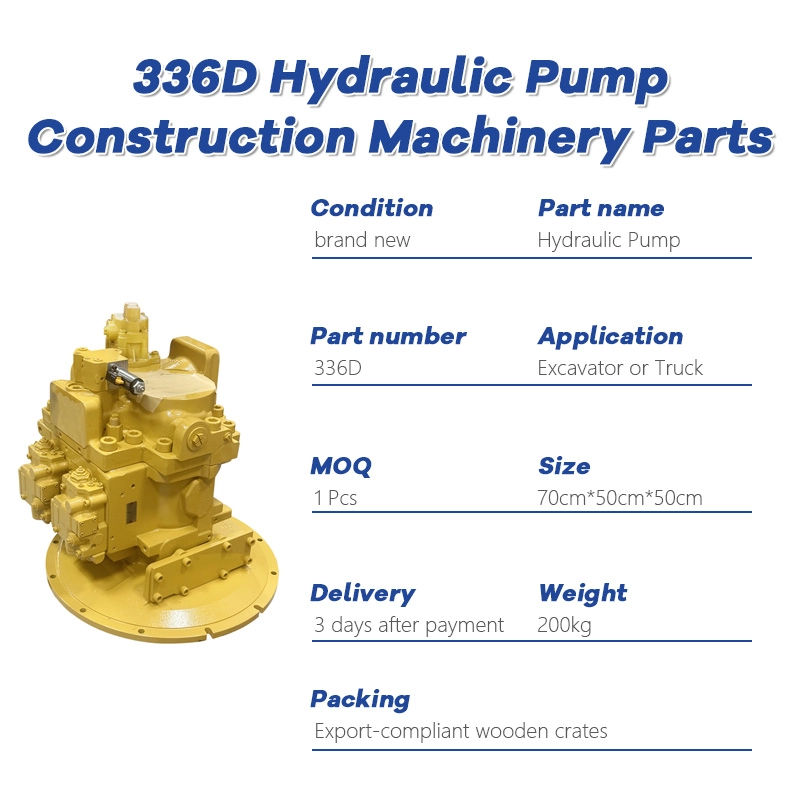
Comparing Heavy Duty CAT Replacement Hydraulic Pumps
Prdoucts Categories
Question you may concern
FAQ
How can I place an order?
You can place an order through our user-friendly online platform or by contacting our sales team directly. Simply browse our catalog, select the parts you need, and follow the checkout process to complete your order.
What types of excavator parts do you offer?
Weihuparts provides a comprehensive range of excavator parts, including but not limited to buckets, hydraulic components, undercarriage parts, and engine components. Our goal is to be your one-stop solution for all excavator needs.
Do you provide installation services for your parts?
While we do not offer installation services directly, we can recommend qualified professionals or resources to assist you with the installation of our parts. Our customer support team can provide guidance on finding local service providers.
Do you offer bulk purchasing options?
Yes, we offer competitive pricing for bulk orders. If you are interested in purchasing large quantities of parts, please contact our sales team to discuss your requirements and receive a customized quote.
Can I return or exchange parts if I change my mind?
Yes, we accept returns and exchanges within [insert return period, e.g., 30 days] of purchase. The items must be unused and in their original packaging. Please contact our customer service team to initiate a return or exchange.
You may also like
336D Excavator Hydraulic Pump | Heavy Duty CAT Replacement
This CAT 336D hydraulic pump is built for power, durability, and optimal performance. It is designed to fit Caterpillar 336D excavators and is available in both OEM and high-quality aftermarket versions. Whether you're replacing a damaged pump or upgrading your hydraulic system, this part ensures long-lasting and reliable operation in demanding construction environments.
-
✔️ Direct fit for CAT 336D excavators
-
✔️ Available in OEM or premium aftermarket
-
✔️ High-pressure performance for heavy-duty operations
-
✔️ Smooth and efficient hydraulic flow
-
✔️ Rigorously tested for quality and durability
-
✔️ Global shipping and responsive support
-
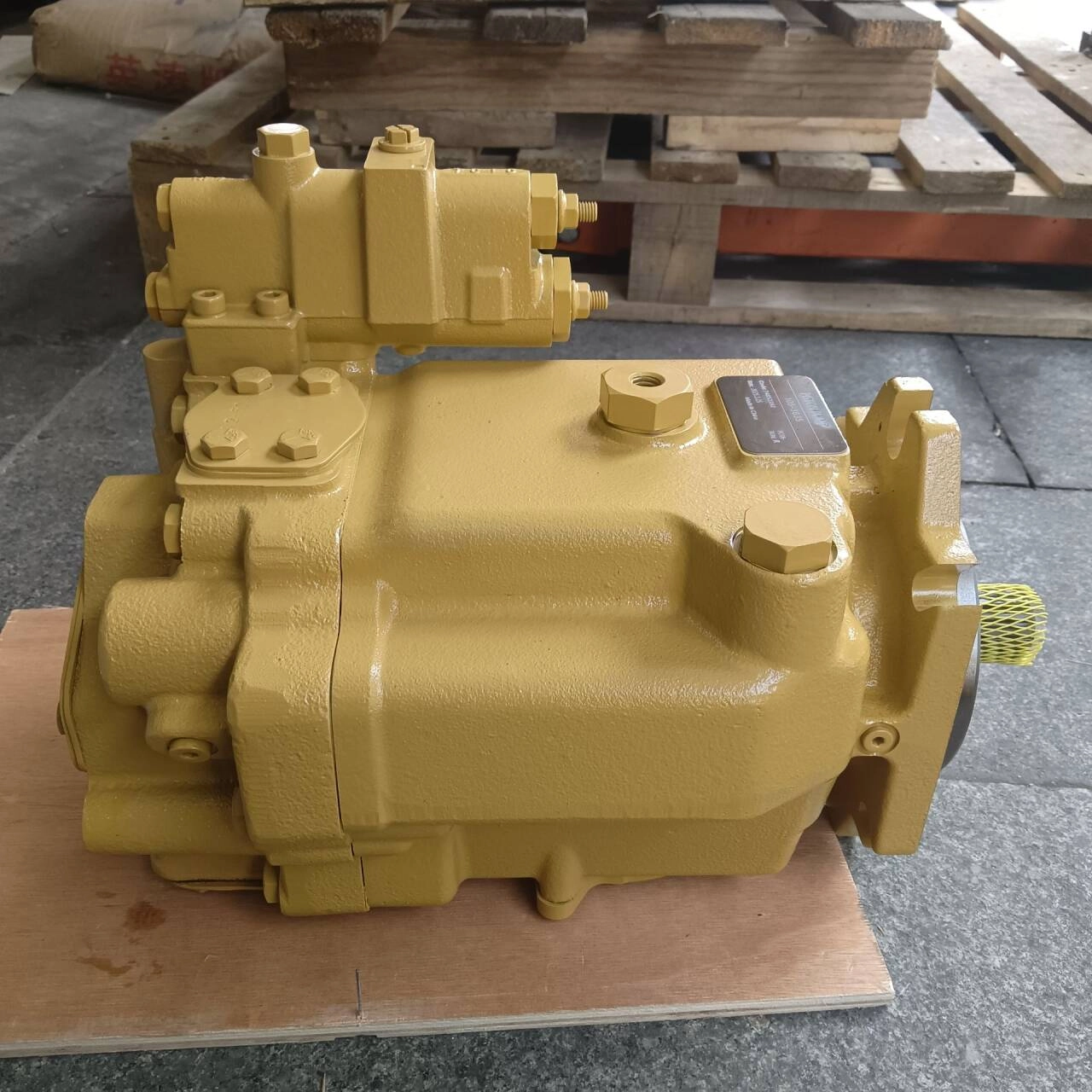
CAT 980H Hydraulic Pump | Heavy-Duty Loader Replacement Part
The CAT 980H and 980G hydraulic pumps are engineered to provide optimal hydraulic power and durability for Caterpillar loaders. Built with premium materials and precision manufacturing, these pumps are ideal for OEM replacements and high-quality aftermarket upgrades. They ensure smooth hydraulic operation and reliable performance in demanding construction environments.
-
✔️ Direct fit for CAT 980H and 980G loaders
-
✔️ Available in OEM and aftermarket versions
-
✔️ High-pressure, heavy-duty hydraulic performance
-
✔️ Manufactured with high-strength alloys and quality seals
-
✔️ Tested for durability and efficiency
-
✔️ Fast global shipping and excellent customer support
- 🛒 Order your CAT 980H & 980G Hydraulic Pump now!
📞 Contact us for bulk orders, technical support, or custom requests.
📦 Fast worldwide shipping | OEM & aftermarket options available -
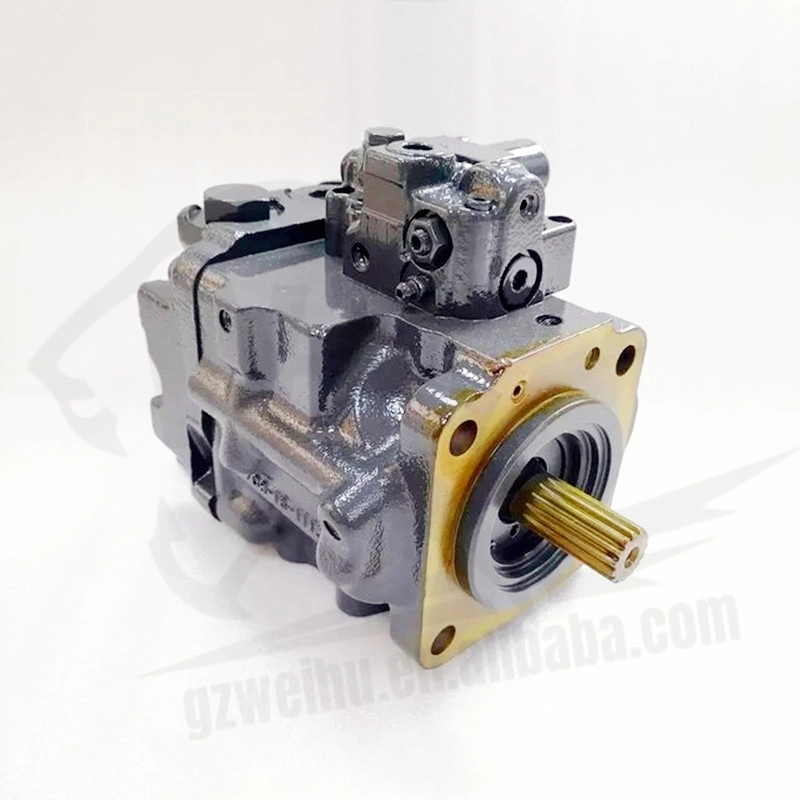
Doosan DX65 Excavator Hydraulic Pump | High-Performance Main Pump
The DX65 hydraulic pump is designed for Doosan DX65 mini excavators, delivering reliable and consistent hydraulic power for smooth machine operation. Whether you're replacing a worn pump or upgrading for enhanced performance, our OEM and aftermarket DX65 pumps offer durability, compatibility, and affordability. Each pump is manufactured using high-quality materials and precision engineering, ensuring long service life and reduced downtime.
-
✔️ 100% fit for Doosan DX65 excavators
-
✔️ Axial piston pump – compact and powerful
-
✔️ OEM & high-quality aftermarket versions available
-
✔️ Tested for pressure, performance & fluid consistency
-
✔️ Precision-sealed with robust alloy components
-
✔️ Global shipping with safe wooden packaging
- 🚜 Order Your Doosan DX65 Hydraulic Pump Today – Performance You Can Trust
📞 Contact Us for stock availability, bulk pricing, or compatibility check
🌍 Fast Global Shipping | OEM & Aftermarket | Secure Payment Options -
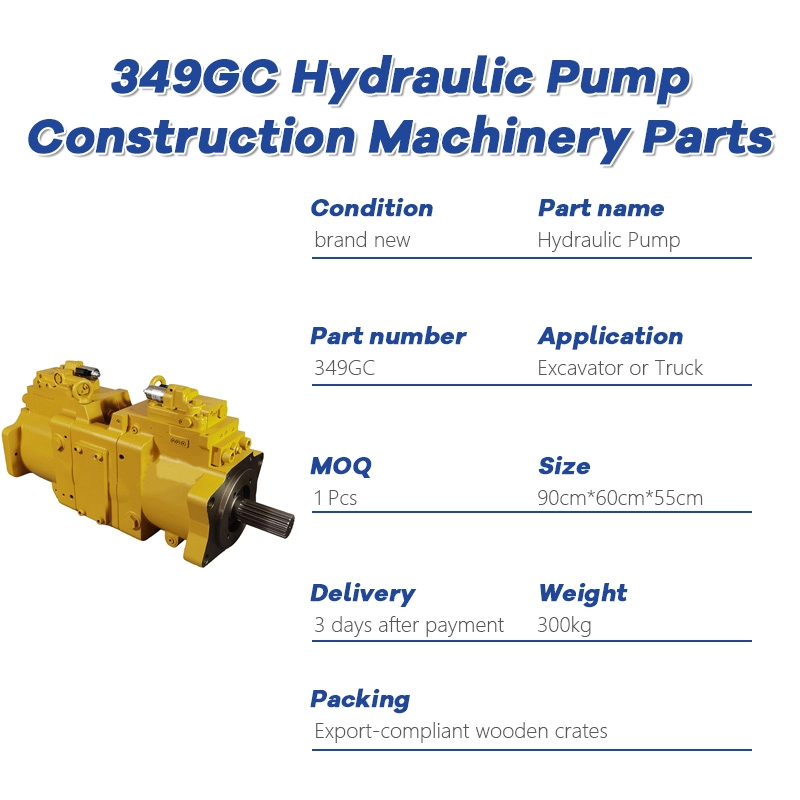
Hydraulic Pump for CAT 349GC | Reliable Performance, Fast Shipping
The CAT 349GC hydraulic pump is engineered to deliver efficient and reliable hydraulic power for Caterpillar 349GC excavators. Manufactured using premium materials and precision engineering, this pump is suitable for OEM replacement or high-quality aftermarket upgrades. It ensures smooth hydraulic flow, durability, and optimal performance even in the most demanding working conditions.
-
✔️ Direct fit for CAT 349GC excavators
-
✔️ OEM and aftermarket options available
-
✔️ High-pressure performance for heavy-duty applications
-
✔️ Manufactured with high-strength alloys and quality seals
-
✔️ Tested for reliability and longevity
-
✔️ Fast global shipping and responsive customer support
- 🚜 Order your CAT 349GC Hydraulic Pump now!
📞 Contact us for bulk pricing, customization, and technical support.
📦 Worldwide shipping available. OEM & aftermarket options.
Get in touch with us
If you have any comments or good suggestions, please leave us a message, later our professional staff will contact you as soon as possible.
To be a happy enterprise in the field of engineering equipment.
Weihuparts delivers efficient and reliable service at each stage to meet the customer's needs.